Quick take
We break down who this device is best for, what it measures, and how it compares in the market.

Key Takeaways
- An 'AFib alert' on a home ECG monitor signals a possible episode of atrial fibrillation, a common but potentially serious heart rhythm abnormality.
- Home ECG devices use AI and rhythm analysis to flag irregularities, but false positives and limitations exist—always confirm with a healthcare professional.
- Understanding your device's report metrics and knowing when to act can help you manage your heart health more confidently.
- Proper device setup, cleaning, and report management ensure more reliable monitoring—and better conversations with your doctor.
Introduction: Why Home ECG Monitors Flag 'AFib Alerts'
Spotting an 'AFib alert' on your home ECG monitor can be unsettling, but it’s become increasingly common as reliable, portable heart rhythm tracking moves into everyday homes. More people now use home ECGs for peace of mind or because their doctor recommended closer monitoring. The technology is especially relevant for those managing high blood pressure, palpitations, or prior heart rhythm issues. If your device flags AFib, it’s not a diagnosis—it’s a prompt to pay closer attention and, if needed, follow up with your healthcare provider.
The rise of at-home heart rhythm monitoring
Portable ECGs with AI analysis, like the 24-Hour ECG Monitor and compact Touchscreen ECG units, have made it easy to track heart rhythms outside the clinic. For anyone with a history of arrhythmias, hypertension, or unexplained symptoms, these monitors can offer timely data between doctor visits.
Who should pay attention to AFib alerts?
Anyone with a known risk of atrial fibrillation, a family history, high blood pressure, or unexplained palpitations should take AFib alerts seriously—but not panic. These devices are also useful for people interested in proactive heart health monitoring, especially when paired with regular communication with a healthcare provider.
What Does an 'AFib Alert' Mean on an ECG Monitor?
Plain-language explanation of atrial fibrillation (AFib)
Atrial fibrillation is a common heart rhythm problem where the upper chambers (atria) beat rapidly and irregularly. This can cause the heart to pump less efficiently and may increase the risk of stroke or other complications if persistent and untreated. On an ECG, AFib appears as an irregular, often rapid rhythm without the usual 'P waves' that signal organized atrial activity.
How home ECG monitors detect AFib using AI analysis
Modern home ECG monitors use built-in algorithms to analyze your heart rhythm for patterns consistent with AFib. Devices like the Wellue 24-Hour ECG Monitor log your heart’s electrical activity, flagging prolonged irregularity, and absence of organized atrial signals. AI analysis increases sensitivity, but can also generate false positives—especially with movement or poor signal quality.
Differences between a single AFib alert and ongoing arrhythmia detection
A one-time AFib alert might reflect a brief, benign rhythm change or technical issue. Repeated or persistent alerts, especially with symptoms (like palpitations, dizziness, or chest discomfort), should be discussed with your doctor. Some devices log every irregularity, while others only flag sustained or distinct AFib patterns—check your device’s user guide for details.
Interpreting Your Core ECG Report Metrics
Common metrics: rhythm strip, heart rate, irregularity detection
Your device’s report usually includes a rhythm strip (graph of your heart’s electrical activity), average and instantaneous heart rates, and notes on rhythm regularity. An AFib alert is triggered by sustained irregularity and absence of P waves. Other arrhythmias—like extra beats or pauses—may be flagged differently.
What triggers an AFib alert versus other arrhythmias?
AFib alerts are generated when the device detects chaotic, irregular heartbeats without clear atrial contractions. Other arrhythmias, such as premature beats (PVCs, PACs), may be noted but don’t trigger an AFib warning. Understanding these distinctions can help reduce unnecessary worry—many irregularities are harmless, while AFib is specifically associated with increased risk.
Understanding the limitations of at-home ECG devices
Home ECGs are screening tools, not definitive diagnostic devices. They may miss brief episodes or misinterpret artifacts (movement, poor skin contact) as AFib. Always review persistent alerts with a qualified healthcare professional, especially if you have symptoms.
What to Do If You Receive an AFib Alert
Immediate steps: when to stay calm, when to seek urgent care
- Stay calm. If you feel well, note the time and save your report. Avoid panic—single alerts are often benign.
- If you have symptoms like severe chest pain, fainting, or shortness of breath, seek urgent medical attention.
- Record any symptoms and export your ECG data for review with your healthcare provider.
Questions to ask your healthcare provider
- Was this a true episode of AFib or a device artifact?
- Do I need further testing (for example, a Holter monitor)?
- Should I make changes to my medications or lifestyle?
- How often should I use my home ECG monitor?
How to share and export your ECG data for telehealth or in-person review
Most devices, such as the Touchscreen ECG Monitor, allow you to export reports as PDFs or image files. Use the companion app or device interface to save and email reports directly to your provider. For efficient telehealth, send a concise summary: date, time, symptoms, and the ECG file.
Choosing and Using a Home ECG Monitor for AFib & Arrhythmia
How to choose a home ECG monitor for reliable alerts
Look for FDA-cleared or CE-marked devices with proven accuracy, clear reporting, and easy data export. If you want long-term tracking, a 24-hour or 72-hour wearable (like Wellue’s 24-Hour ECG Monitor) makes sense. For spot checks and shareable reports, a portable touchscreen model is ideal. See our guide on how to choose a home ECG monitor for a detailed breakdown.
Home ECG monitor vs Holter monitor: what’s best for long-term tracking?
| Device | Best for | Duration | Data Sharing | Practical Limitations | Link |
|---|---|---|---|---|---|
| Spot checks, daily use | 30 sec – 5 min per reading | Easy app/PDF export | May miss rare events | ||
| Continuous rhythm tracking | 24–72 hours | App + export | More setup, less discreet | ||
| Medical-grade monitoring | 24–48 hours | Clinic-only | Requires prescription, less accessible |

For most people, a home ECG monitor is sufficient for routine checks. If your doctor suspects silent or rare arrhythmias, a Holter monitor may be recommended for continuous, clinical-grade recording.
Affordable and best-value options for home monitoring
If you’re seeking a cheap and best BP monitor or a straightforward ECG device, consider models with basic rhythm tracking and app export—these deliver excellent value for regular users.
Reading and Managing Your Device's Reports
How to read your ECG report: key sections and what they mean
Your ECG report typically includes:
- Rhythm strip: Visual snapshot of your heart’s electrical pattern.
- Heart rate: Average and peak rates during the recording.
- Event markers: Flags for irregular rhythm, AFib, or other arrhythmias.
- Quality indicators: Signal strength, noise/artifact warnings.
Storing, managing, and re-analyzing your ECG data at home
Store your reports digitally for easy retrieval. Use device-compatible apps to organize, tag, and share your data. The ECG 1000 ECG Data Management System offers batch import, report export, and reanalysis tools for those tracking long-term trends or sharing multiple readings with a provider.
Device Cleaning, Maintenance, and Accurate Readings
Best practices for cleaning your home ECG monitor
Wipe sensors and contact areas with a soft, damp cloth after each use. Avoid harsh cleaners and never submerge the device. Replace single-use electrode patches as directed for wearable models.
Maintaining accuracy: tips for regular use and troubleshooting
- Ensure skin is clean and dry before each reading.
- Hold or apply device as instructed; minimize movement during recording.
- Check battery levels and update device firmware as needed.
- If readings are inconsistent, review the manual’s troubleshooting tips or contact support.
When to Rely on Home ECG Monitoring—and When to Consult a Professional
Understanding the difference between home and clinical ECGs
Home ECGs are valuable for screening and trend tracking, but they do not replace professional evaluation. If you receive repeated AFib alerts, have symptoms, or feel uncertain, share your device’s data with your healthcare provider for expert interpretation.
Scenarios requiring medical advice or escalation
- Multiple consecutive AFib alerts
- Symptoms like fainting, chest pain, or severe shortness of breath
- Concerns about device accuracy or report interpretation
Who This Is For
This guide is for anyone using a home ECG monitor, whether you’re managing known heart rhythm issues, monitoring after a new diagnosis, or simply want more control over your heart health. If you’re unsure which device suits your needs, start with a basic spot-check ECG for occasional use. For tracking persistent or unexplained symptoms, a 24-hour recorder gives more comprehensive data.
Glossary: Common Terms in Home ECG & Rhythm Monitoring
- AFib (Atrial Fibrillation): An irregular, often rapid heart rhythm that can increase stroke risk.
- Arrhythmia: Any abnormal heart rhythm.
- ECG/EKG: Electrocardiogram, a test recording the heart’s electrical activity.
- Artifact: False readings or noise on an ECG caused by movement or poor contact.
- Holter Monitor: A clinical wearable ECG that records continuously for 1-2 days.
Product Examples
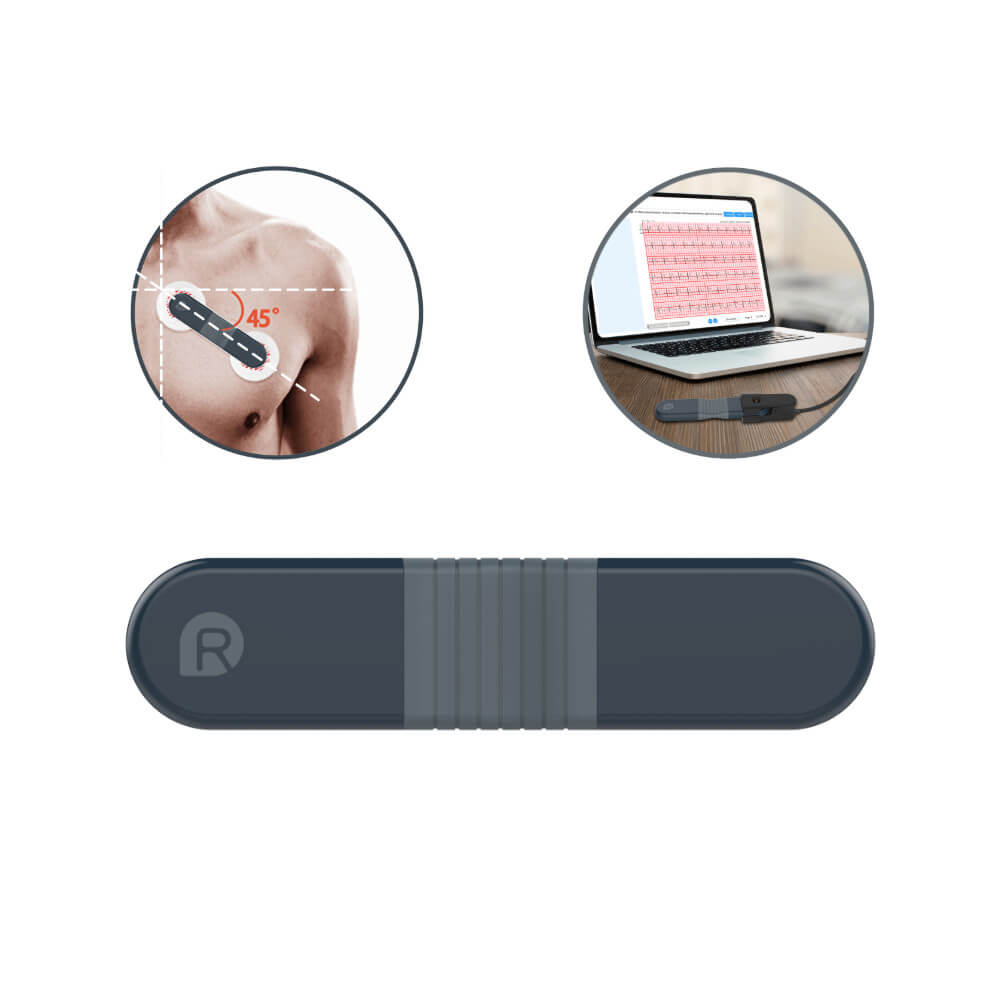
24-Hour ECG Monitor
Best for: Continuous rhythm tracking over 24–72 hours. The ideal option if you have frequent symptoms or need AI-powered logging at home. One limitation: setup and learning curve are higher than with portable spot-check devices. Real-world use: A patient with intermittent palpitations captures elusive rhythm changes missed during brief clinic ECGs.
See product
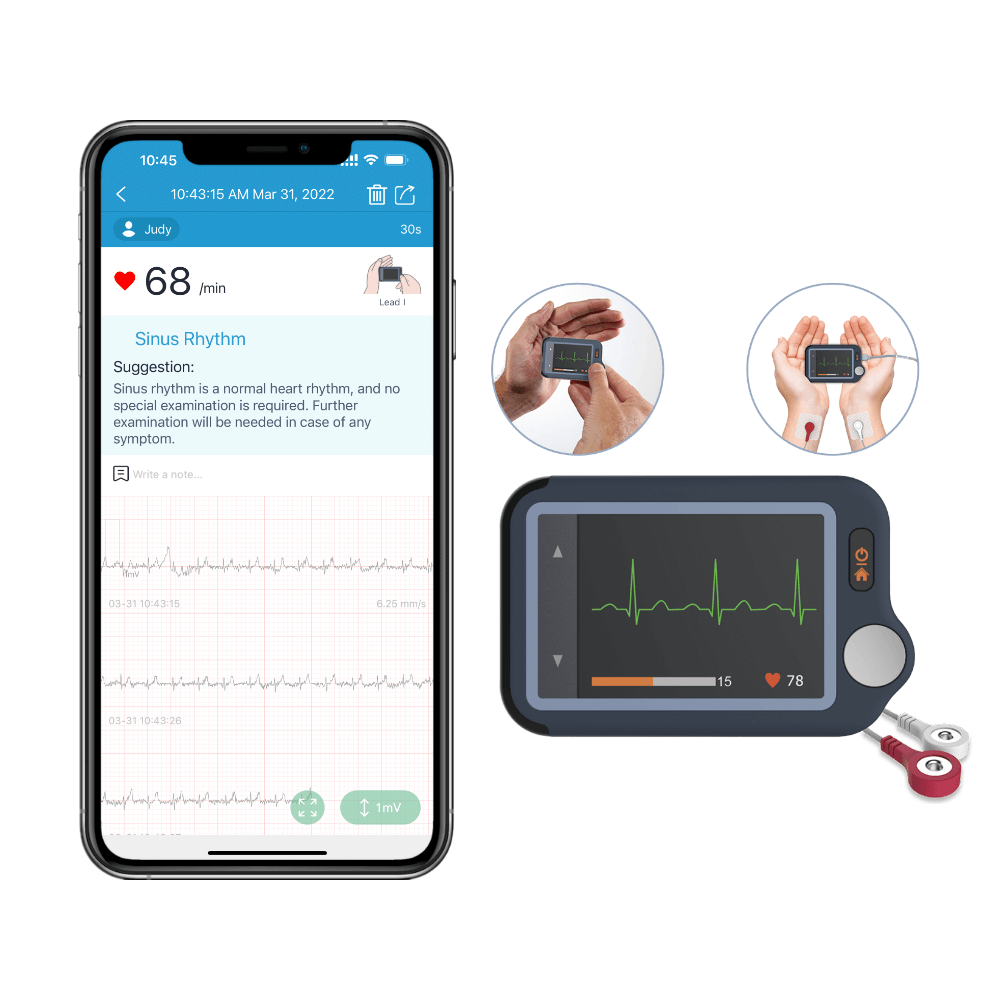
Touchscreen ECG Monitor
Best for: Quick, on-demand checks and easy report sharing. Simple enough for daily use by older adults or busy professionals. One limitation: may miss rare arrhythmias not present during short spot checks. Real-world use: A person with high blood pressure tracks rhythm after medication adjustments and sends reports to their doctor.
See product
If You’re Unsure
If you’re new to home ECG monitoring and unsure which option to choose, start by considering how often you experience symptoms. For rare or brief events, a portable ECG is usually enough. If your symptoms are more frequent or unpredictable, a 24-hour wearable recorder gives better odds of capturing important data. And always remember: your monitor is an aid—partner with your healthcare provider to interpret alerts and plan next steps.