
Introduction
In an age where technology enables us to monitor our health from the comfort of our homes, choosing the right home ECG monitor is crucial for effectively managing our heart health. With various options available, understanding the features and benefits of each type can help you make an informed decision. This article aims to demystify the selection process, ensuring you find the right device for your needs.

Understanding ECG Monitoring
What is an ECG Monitor?
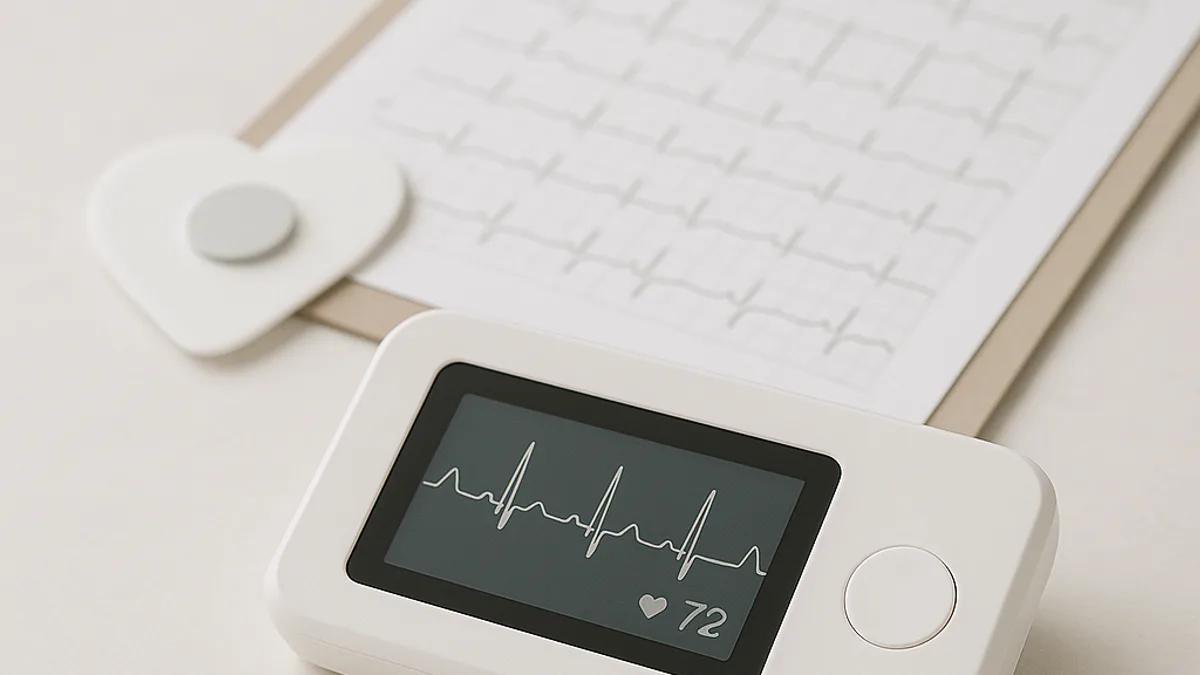
An ECG (electrocardiogram) monitor is a device that records the electrical activity of your heart over a period of time. These devices can help detect heart rhythm abnormalities that may not be noticeable during a routine check-up. By capturing and analyzing heart rhythms, ECG monitors facilitate early detection of potential heart issues.
Why Use a Home ECG Monitor?
Using a home ECG monitor allows for continuous monitoring of your heart health, providing insights that can be shared with healthcare providers. This is particularly useful for individuals with a history of heart problems or those at risk for conditions such as arrhythmias. Monitoring from home also offers convenience, reducing the need for frequent hospital visits.
Key Features to Consider
Portability
When choosing a home ECG monitor, consider its portability. Compact and lightweight models allow for easy use anywhere, whether at home or while traveling. Devices like the Personal ECG Monitor with AI Analysis are designed for on-the-go monitoring, enabling you to take ECG readings whenever necessary.
Data Management and AI Analysis
Modern ECG monitors often come equipped with AI analysis capabilities, which can enhance the accuracy of readings and provide more insightful data. For example, the 24-Hour ECG Monitor offers AI analysis and continuous logging, making it easier to identify irregularities in heart rhythms.
Recording Duration Options
Different ECG monitors allow for varying recording durations. Some devices offer quick, on-demand readings, while others can record continuously for 24 hours or longer. If you require long-term monitoring, look for models like the 12-Channel Holter Monitor, which provides extensive data over extended periods.
Ease of Use
A user-friendly interface can make a significant difference in your experience with an ECG monitor. Look for touchscreen options or clear displays that simplify navigation through settings and data. The ECG Recorder with Screen features an intuitive interface that allows users to review their data easily.
Types of Home ECG Monitors
Personal ECG Monitors
Personal ECG monitors are compact devices that allow users to take ECG readings on demand. They are ideal for individuals who need to monitor their heart health frequently without the hassle of complex setups. The Personal ECG Monitor with AI Analysis is a great example, offering portability and easy app integration.
24-Hour ECG Recorders
For those who require continuous monitoring, 24-hour ECG recorders are the best choice. These devices are designed to capture heart data over an extended period, providing comprehensive insights into heart health. They are particularly beneficial for diagnosing intermittent symptoms that may not appear during a standard ECG test.
Multi-Lead ECG Devices
Multi-lead ECG devices are more sophisticated and are often used in clinical settings but are becoming available for home use. These devices can provide a detailed view of heart activity, making them suitable for those with specific cardiac conditions. The 12-Channel Holter Monitor is an example of a robust option for extensive ECG data collection.
How to Choose the Right ECG Monitor for You
Assess Your Health Needs
Your health status and monitoring needs will greatly influence your choice of an ECG monitor. If you have a history of heart disease or experience symptoms like palpitations, a more advanced device may be necessary.
Consider Your Budget
Home ECG monitors come in a range of prices. While more advanced models often offer enhanced features and capabilities, there are also affordable options available that can meet basic monitoring needs.
Read Customer Reviews
Researching customer experiences can provide valuable insights into the reliability and performance of different ECG monitors. Reviews can help you understand the pros and cons of each model from real users who have similar needs.
Conclusion
Choosing the right home ECG monitor is an essential step in managing your heart health effectively. By considering factors such as portability, data management, recording options, and ease of use, you can find a device that suits your lifestyle and health needs. For a dependable choice, the 24-Hour ECG Monitor is an excellent option for comprehensive heart monitoring. If you prefer simplicity, the Personal ECG Monitor may be best for you.
Who this is for
This guide is for anyone looking to monitor their heart health at home, whether you have a pre-existing condition or simply want peace of mind about your cardiovascular status.
Key Takeaways
- Understand the purpose and benefits of using a home ECG monitor.
- Evaluate key features like portability, data management, and ease of use.
- Differentiating between types of ECG monitors can help you find the right fit for your health needs.
Related reading
Sources and verification
Last checked: February 5, 2026
-
24-Hour ECG Monitor with AI Analysis, Continuous ECG/EKG Monitoring at Home – Wellue
Most portable long-term ECG monitor with AI analysis. Most portable long-term ECG monitor with AI analysis. Help to capture heart abnormalities that are hard to detect during an electrocardiogram (ECG)
-
ECG Management System – Wellue
ECG data management for Biocare 12-lead ECG machines: 12-lead ECG tablet, iE300 3-channel ECG machine, iE6 6-channel ECG machine, iE12A 12-channel ECG machine. It is composed of the installation U disk, the USB dog driver and a set of serial port cable. And The U disk includes ECG Management installation program and the dongle program modules. • Compatible with Windows XP, Win7, Win8, Win10, Vista in 32/64 bit;• Connect with all Biocare ECGs by different ports: RS-232, USB, LAN and WIFI;• Support single file or batched files imported from ECGs;• Huge data storage and management capability;• High accuracy electronic ruler for ECG files re-analysis and re-edit;• Powerful standard and customized diagnosis templates;• Multiple file formats to export: XML, DICOM, BMP, JPG, PDF;• Support A4 paper printing.
-
Personal ECG Monitor with AI Analysis. Get ECGs & Results on Touchscreen or APP. – Wellue
Take ECG on your palm or take noise-free ECG with external cable as you like. Enable to take ECGs for kids with external cable. 30 seconds/60seconds/5minutes recording duration for choose.
-
Medical Devices | FDA
The .gov means it’s official.Federal government websites often end in .gov or .mil. Before sharing sensitive information, make sure you're on a federal government site. The site is secure. The https:// ensures that you are connecting to the official website and that any information you provide is encrypted and transmitted securely. Helping innovators, providers, and patients reimagine the home as an integral part of the health care system.
-
High Blood Pressure - What Is High Blood Pressure? | NHLBI, NIH
An official website of the United States government Official websites use .gov A .gov website belongs to an official government organization in the United States. Secure .gov websites use HTTPS A lock ( A locked padlock ) or https:// means you’ve safely connected to the .gov website. Share sensitive information only on official, secure websites.
-
High blood pressure (hypertension) - Symptoms & causes - Mayo Clinic
High blood pressure is a common condition that affects the body's arteries. It's also called hypertension. If you have high blood pressure, the force of the blood pushing against the artery walls is consistently too high. The heart has to work harder to pump blood. Blood pressure is measured in millimeters of mercury (mm Hg). In general, hypertension is a blood pressure reading of 130/80 mm Hg or higher. The American College of Cardiology and the American Heart Association divide blood pressure into four general categories. Ideal blood pressure is categorized as normal.