
Key Takeaways
- Noise level is a critical factor for apartment dwellers using portable oxygen concentrators, especially overnight.
- Decibel ratings and real-world placement strategies can significantly impact comfort and sleep quality.
- Top FDA-cleared portable oxygen concentrators offer varying quietness—always check actual dB ratings and user feedback.
- Simple noise reduction tips and maintenance routines can further minimize disturbance.
- Balancing noise, performance, and therapy needs is key to selecting the best POC for apartment use.
Introduction: Why Noise Level Matters in Apartment POC Use
Portable oxygen concentrators (POCs) are a lifeline for many, but in an apartment, the device you choose can make the difference between restful nights and sleepless frustration. Thin walls, compact rooms, and sensitive neighbors turn a minor hum into a major factor. Whether you’re using your device overnight or throughout the day, understanding portable oxygen concentrator noise comparison for apartment use is crucial for comfort and harmony.

Understanding POC Noise Ratings: Decibels Explained
What do POC decibel (dB) ratings actually mean?
Noise from POCs is measured in decibels (dB). The scale is logarithmic: 30 dB is considered whisper-quiet; 40–45 dB is typical for a quiet room; 50 dB can disrupt sleep for light sleepers. Most quiet portable oxygen concentrators for sleep aim for 40 dB or below at the lowest flow settings, but always check the manufacturer’s stated ratings and, when possible, real user reviews.
Real-World Examples
Many apartment users report that a POC rated at 38–42 dB is generally tolerable for bedroom use, especially with doors closed or soft furnishings to absorb sound. For context, a standard refrigerator hums at about 40 dB. Some models, especially at higher flow rates, may be louder—so the right match depends on your sensitivity and therapy settings.
Nighttime Comfort Thresholds
For uninterrupted sleep, most people prefer devices staying under 45 dB at the bedside. If you’re noise-sensitive, targeting 40 dB or less is ideal. Always weigh this alongside oxygen delivery and battery runtime.
Apartment-Specific Noise Concerns
Room Size, Hard Surfaces, and Sound Amplification
Small rooms amplify noise. Hard floors or bare walls reflect sound, making even moderate device hum more noticeable. If you’re in a studio or have minimal furniture, these factors matter.
Placement Strategies for Minimal Disturbance
Position the POC away from walls and on a soft surface (like a small rug or mat). Never enclose the device—ventilation is essential—but strategic placement can significantly reduce perceived noise. For nighttime use, placing the machine in an adjoining room with longer cannula tubing can make a dramatic difference.
Wall-Sharing and Building Acoustics
If you share walls, especially in older buildings with minimal insulation, device noise can travel. Opt for models with lower dB ratings and test different placements to limit neighbor disturbance.
Comparison Table: Leading Portable Oxygen Concentrators for Apartment Use
| Model | dB Rating (Approx.) | Flow Type | Weight | Best For | Warranty | Quick View | Actions |
|---|---|---|---|---|---|---|---|
| ≈42 dB (low settings) | Pulse/Adjustable | 4.4 lbs | Apartment, travel, sleep | 3 Years | Product Page | ||
| ≈43 dB (low) | Pulse Dose | 4.4 lbs | Lightweight, on-the-go, sleep | 3 Years | Product Page | ||
| ≈45 dB (low), up to 50 dB (high) | Continuous | Heavier (home) | High-flow, 24/7, larger apartments | 3 Years | Product Page |

Quiet Portable Oxygen Concentrators for Sleep: Features & Performance
Pulse dose models like the Wellue Portable Oxygen Concentrator with O2 Monitor (see product) are compact and designed for both mobility and sleep. Their intermittent delivery means the compressor isn’t running constantly, helping to keep nighttime noise modest—around or below 42 dB at lower settings. These are often the top picks for those seeking a quiet portable oxygen concentrator for sleep in a shared building.
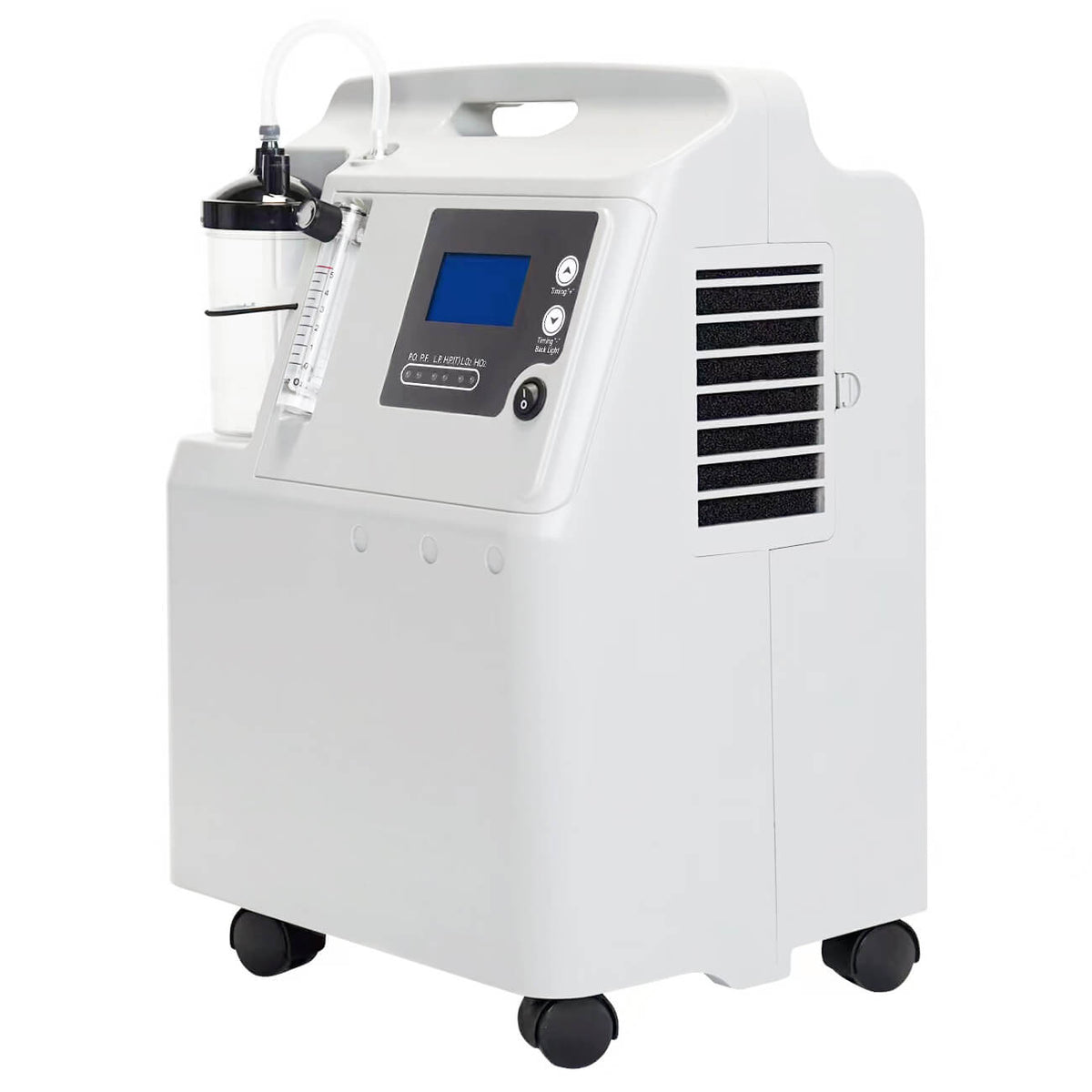
The Wellue Pulse Dose Portable Oxygen Concentrator offers similar performance, with slightly different pulse settings and comparable decibel output. Both models are easy to move, making it simple to experiment with placement in your apartment for minimal disruption. For those needing higher, continuous flows, the Wellue 5L Oxygen Concentrator is robust but can be a few decibels louder—best suited for larger apartments or users prioritizing 24/7 therapy over absolute quiet.
Battery operation is slightly quieter than plugged-in use for some units, as cooling fans may run less aggressively, but the difference is rarely dramatic. User feedback consistently suggests that pulse dose models are less likely to interrupt sleep or disturb neighbors, especially with thoughtful setup.
Oxygen Concentrator Noise Reduction Tips
- Placement: Use a thick mat, carpet, or foam pad under your device to absorb vibration.
- Isolation: Leave several inches between the POC and any wall to avoid amplifying sound.
- Barriers: A cloth-covered folding screen or bookshelf between the device and your bed can dampen sound without blocking airflow.
- Maintenance: Clean or replace filters regularly—clogged filters can force the compressor to work harder and get louder.
Reading Device Reports: What to Look for Beyond Noise Ratings
While decibel numbers matter, always consider oxygen concentration (ideally 93% ±3%), battery runtime, and alarm features. Some devices offer real-time O2 feedback—for example, Wellue’s O2Ring can help monitor therapy effectiveness overnight. A slightly noisier unit with better oxygen delivery may be a worthwhile trade-off, depending on your health needs.
Who This Is For
If you live in an apartment and value quiet, choose a pulse dose model under 45 dB for sleep. For those needing higher or continuous flow, look for units with robust build quality and consider extra sound dampening. If you’re unsure, start with a portable model and test it in your space—many providers offer a 30-day return window.
Summary: Choosing the Right POC for Peaceful Apartment Living
For most apartment dwellers, a pulse dose portable oxygen concentrator strikes the best balance between quiet operation and effective oxygen therapy. The Wellue Portable Oxygen Concentrator with O2 Monitor is a strong all-around choice, combining mobility, sleep-friendly noise levels, and real-time tracking in a compact package. If you need higher output, the Wellue 5L Oxygen Concentrator brings continuous flow, but at a slight cost in decibel levels. Ultimately, careful placement, routine maintenance, and the right model can help you enjoy peaceful, neighbor-friendly oxygen support—day or night.
FAQs: Portable Oxygen Concentrator Noise in Apartments
Related reading
Sources and verification
Last checked: April 11, 2026
-
Travel Oxygen Concentrator with Real-Time O2 Feedback | Up to 9 Hours with 2 Batteries for Longer Outing, 93%±3% High Oxygen Concentration – Wellue
FDA-Cleared | 3-Year Warranty | 30 Days Return *Rx required! Please email your prescription to support@getwellue.com Easy to carry with small size and 4.37 pounds
-
Travel Oxygen Concentrator (Up to 9 Hours), 93% High Purity, 5 Pulse Flow Settings for Oxygen Therapy On The Go – Wellue
FDA-Cleared | 30-Day Returns | 3-Year Warranty | Free Shipping *Rx required! Please email your prescription to support@getwellue.com FDA-Cleared | 30-Day Returns | 3-Year Warranty
-
5L Oxygen Concentrator (FDA-Cleared) Delivers Supplemental Oxygen 24/7. O2 Purity: 93%±3% (Flow Rate: 0.5-5 L/M). Home Use Medical-Grade. – Wellue
Our 5L Oxygen Concentrator, a medical-grade device, delivers supplemental oxygen up to 5 LPM continuously for those who need additional oxygen support, available 24/7, all year round. It can effectively treat patients with lung disorders such as COPD and pulmonary fibrosis, as well as cardiovascular diseases and other conditions associated with hypoxia. The 5 liter oxygen concentrator is an FDA-cleared product and comes with a 30-day money back guarantee. Within 30 days, you can get a full refund if you are unsatisfied with the item. The oxygen concentrator also comes with a worry-free 3-year warranty. O2Ring is a ring oximeter that can monitor your blood O2 levels and heart rate continuously overnight. Designed for convenience and comfort, this health tracker is an innovative tool to monitor the effectiveness of your daily oxygen therapy and record the long-term changes in your body. Now, you can get the O2Ring and 5L oxygen concentrator together at an exceptionally favorable price.
-
Medical Devices | FDA
The .gov means it’s official.Federal government websites often end in .gov or .mil. Before sharing sensitive information, make sure you're on a federal government site. The site is secure. The https:// ensures that you are connecting to the official website and that any information you provide is encrypted and transmitted securely. Helping innovators, providers, and patients reimagine the home as an integral part of the health care system.
-
High Blood Pressure - What Is High Blood Pressure? | NHLBI, NIH
An official website of the United States government Official websites use .gov A .gov website belongs to an official government organization in the United States. Secure .gov websites use HTTPS A lock ( A locked padlock ) or https:// means you’ve safely connected to the .gov website. Share sensitive information only on official, secure websites.
-
High blood pressure (hypertension) - Symptoms & causes - Mayo Clinic
High blood pressure is a common condition that affects the body's arteries. It's also called hypertension. If you have high blood pressure, the force of the blood pushing against the artery walls is consistently too high. The heart has to work harder to pump blood. Blood pressure is measured in millimeters of mercury (mm Hg). In general, hypertension is a blood pressure reading of 130/80 mm Hg or higher. The American College of Cardiology and the American Heart Association divide blood pressure into four general categories. Ideal blood pressure is categorized as normal.