
Key Takeaways
- Talking blood pressure monitors are crucial for visually impaired users who want independent, accurate self-monitoring at home.
- Prioritize voice clarity, tactile controls, and accessible cuff design when comparing devices.
- Upper-arm cuffs generally offer better accuracy, but wrist-based options provide more convenience for some users.
- Proper setup and regular maintenance boost accuracy and device longevity.
Introduction: Why Talking Blood Pressure Monitors Matter
Almost half of adults in the U.S. live with high blood pressure or hypertension, and self-monitoring at home is a cornerstone of effective management (NHLBI). For those with visual impairments, however, traditional monitors with only digital screens can be a barrier. Talking blood pressure monitors, featuring spoken instructions and results, bridge this gap—delivering independence and peace of mind for users and caregivers alike.
Who this is for
If you're visually impaired or care for someone who is, and you need clear, reliable blood pressure readings at home, talking BP monitors are purpose-built for accessibility. They're also valuable for anyone who prefers an audible report or struggles with interpreting small display screens.
Key Features of Talking Blood Pressure Monitors
- Voice guidance and audio output: Look for clear, loud, and pace-controlled speech. Some models offer multiple language options.
- Accessibility: Large tactile buttons, easy-to-feel cuff orientation, and minimal setup steps all help users operate devices confidently.
- Accuracy: Upper arm cuffs remain the standard for hypertension management, though wrist-based models offer portability.
- Cuff type: Pre-formed or easily guided cuffs assist users with limited vision.
- Battery life and portability: Essential for frequent travelers or those with limited dexterity.
Top Home Blood Pressure Monitors With Talking Functions (2026)
Our review emphasizes real-world accessibility, focusing on models with voice-guided measurement, tactile controls, and reliable accuracy. Each device was assessed for ease of use by visually impaired users, voice clarity, and daily practicality.
AirBP Plus Blood Pressure Monitor with Screen
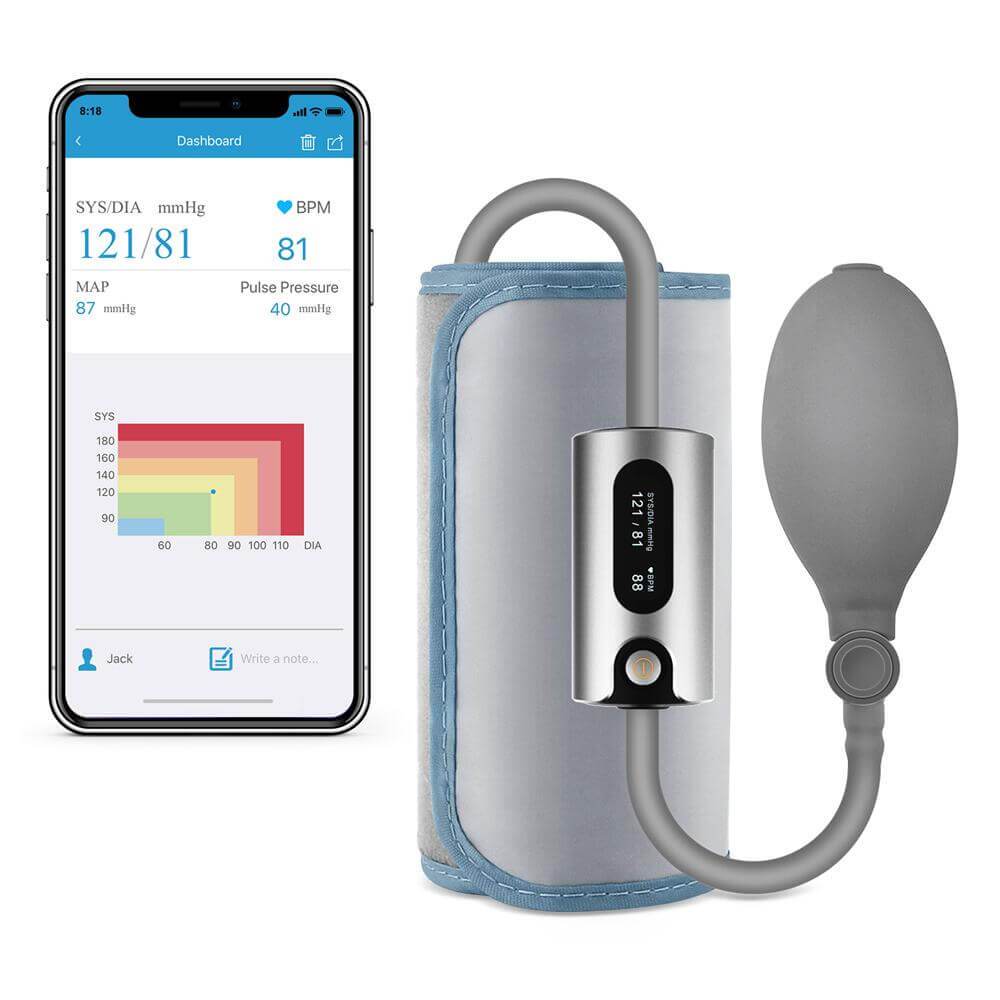
The AirBP Plus stands out for its straightforward design and reliable readings. The large, easy-to-wrap upper-arm cuff and intuitive controls make it well-suited for users with limited vision or dexterity. Voice prompts guide you through setup and announce results clearly. One limitation: the cuff fit needs to be correct for the most accurate results, so first-time users may require help initially. For those who want consistent, trusted measurements and simple connectivity to a companion app for audio history, AirBP Plus is a dependable daily tool.
Smart Blood Pressure Watch With Heart Rate And Blood Oxygen

For users seeking a blend of convenience and continuous trend tracking, the Smart Blood Pressure Watch offers a wearable solution. Its voice feedback is clear, and the wrist-based form factor simplifies daily wear—ideal for those with limited arm mobility or frequent travelers. Note that wrist monitors can be more sensitive to positioning and may require occasional calibration for the most accurate results. This device excels for users who value hands-free tracking and want voice-guided summaries on the go.
Bluetooth Upper Arm Blood Pressure Monitor
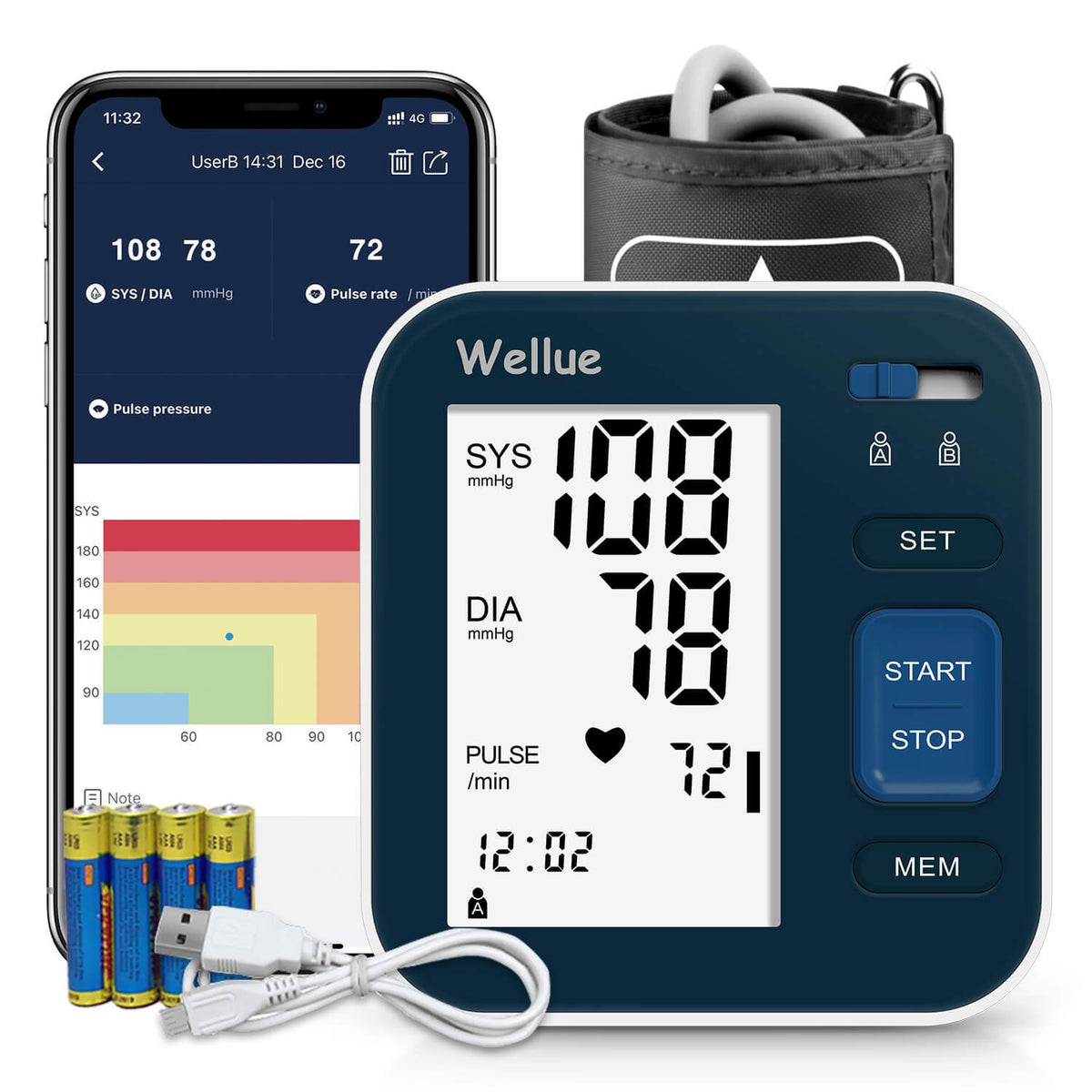
The Bluetooth Upper Arm Blood Pressure Monitor combines the trusted accuracy of an upper-arm cuff with accessible, audible feedback. The unit’s tactile buttons and spoken instructions simplify operation for visually impaired users. As with other upper-arm models, ensuring correct cuff placement is important, but the auto-inflate feature helps reduce setup hassles. It’s well-suited for users who want precise measurements and optional app syncing for tracking progress over time.
Comparison Table: Talking BP Monitors for Visually Impaired Users
| Model | Voice Guidance | Cuff Type | Accuracy | Ease of Use | Price | Best For | Links | Actions |
|---|---|---|---|---|---|---|---|---|
| AirBP Plus Blood Pressure Monitor | Clear, step-by-step | Upper-arm | High | Simple controls, large cuff | $ | Daily reliable readings | Review | Product | |
| Smart BP Watch | Concise, audible alerts | Wrist | Moderate (needs correct placement) | Wearable, minimal setup | $ | Continuous, on-the-go trends | Review | Product | |
| Voice instructions and results | Upper-arm | High | Auto-inflate, tactile controls | $ | Trusted at-home monitoring | Review | Product |
If you're unsure...
Choose an upper-arm model (like AirBP Plus or Bluetooth Upper Arm BP Monitor) if you prioritize accuracy and have help for initial setup. If you need quick, wearable convenience and are comfortable with wrist placement, the Smart BP Watch is a practical choice. Voice clarity and large, easy-to-feel controls are essential for all options.
How to Choose the Best Blood Pressure Monitor for Visually Impaired Users
- Assess how and when you'll use the device—will you measure at home only, or on the go?
- Test the voice volume and clarity if possible, and ensure the device offers tactile, easy-to-locate controls.
- Select a cuff size that matches your arm and is easy to put on with minimal vision.
- Check for straightforward maintenance and easy-to-clean surfaces.
- Confirm the brand’s support options, especially for troubleshooting or warranty questions.
Setup, Use, and Maintenance: Tips for Accessible Home Monitoring
- Initial setup: Unbox the device, insert batteries, and follow the spoken prompts to set language and volume before first use.
- Accurate readings: Always sit upright, keep the cuff at heart level, and rest quietly during measurement. Users may want to practice with assistance the first few times.
- Cleaning: Wipe cuffs and device surfaces with a damp, soapy cloth. Avoid immersing the device or letting moisture reach internal electronics.
- Interpreting results: Most talking BP monitors announce systolic, diastolic, and pulse readings, sometimes with simple interpretive cues (e.g., "Your blood pressure is in the normal range").
Conclusion: Making Home Blood Pressure Monitoring Accessible
Accessible blood pressure monitors are a game-changer for visually impaired users, offering the freedom to track health and respond to changes independently. For most, the AirBP Plus Blood Pressure Monitor offers the best blend of voice guidance, accuracy, and everyday simplicity. If you need a wearable option for continuous, on-the-go tracking, the Smart Blood Pressure Watch is a strong alternative—just remember to double-check positioning for best results.
Accessibility checklist for a talking BP monitor
| Feature to test | Question to ask before buying |
|---|---|
| Voice output | Does it announce SYS, DIA, pulse, units, errors, memory, and battery state? Can speed or volume be changed? |
| Physical controls | Can a user start a reading and identify the correct user profile without relying on a touchscreen? |
| Cuff and setup | Is the cuff range clear in audio and does the tube connection have tactile feedback? |
| Validation | Is the exact model and cuff listed in an independent validation source or documented by the provider? |
| Rhythm alerts | Does the manual say an irregular-pulse flag is a screening signal rather than an AF diagnosis? |
For users with low vision, accessible audio does not compensate for an incorrect cuff or unvalidated device. The AHA recommends a validated automatic upper-arm cuff-style monitor and two readings one minute apart. If a device flags irregular pulses repeatedly, record the readings and ask a clinician; a normal pulse rate does not rule out an irregular rhythm during another interval.
Primary check: AHA home BP monitoring · FDA authorization warning for BP devices.
Related reading
Sources and verification
Last checked: September 7, 2026
-
Wireless Blood Pressure Monitor. Support Free App works with Apple Health for easy management. – Wellue
*Only available in the USA and EU countries. *Only available in the USA and EU countries. A BP monitor to deliver accurate results.
-
Smart Blood Pressure Watch with Oscillometric Micro Air Cuff | Wellue
Keep Track of Your Well-being Anytime & Anywhere * Please note that incorrect posture and wearing methods can affect the accuracy of the measurement results. For more details, please refer to the measurement steps.
-
Wellue Bluetooth Upper Arm Blood Pressure Monitor. The best home blood pressure monitor. The most accurate blood pressure monitor. Fully automatic.
When treating different types of disease of respiratory system, the mesh nebulizer is able to make variable nebulization rates between 0.15ml/min to 0.90ml/min. The device is also designed to have two different working modes, surge® mode which delivers auto-changing amounts of nebulized medicine and variable frequency mode which lets users manually control the nebulization rate. According to the World Health Organization (WHO), an estimated 1.13 billion people worldwide have hypertension. Especially in North America, "Nearly half of adults in the United States (108 million, or 45%) have hypertension defined as a systolic blood pressure ≥ 130 mm Hg or a diastolic blood pressure ≥ 80 mm Hg or are taking medication for hypertension" (www.cdc.gov). However, fewer than 1 in 5 people with hypertension have the problem under control. According to the World Health Organization (WHO), an estimated 1.13 billion people worldwide have hypertension. Especially in North America, "Nearly half of adults in the United States (108 million, or 45%) have hypertension defined as a systolic blood pressure ≥ 130 mm Hg or a diastolic blood pressure ≥ 80 mm Hg or are taking medication for hypertension" (www.cdc.gov). However, fewer than 1 in 5 people with hypertension have the problem under control.
-
Medical Devices | FDA
The .gov means it’s official.Federal government websites often end in .gov or .mil. Before sharing sensitive information, make sure you're on a federal government site. The site is secure. The https:// ensures that you are connecting to the official website and that any information you provide is encrypted and transmitted securely. Helping innovators, providers, and patients reimagine the home as an integral part of the health care system.
-
High Blood Pressure - What Is High Blood Pressure? | NHLBI, NIH
An official website of the United States government Official websites use .gov A .gov website belongs to an official government organization in the United States. Secure .gov websites use HTTPS A lock ( A locked padlock ) or https:// means you’ve safely connected to the .gov website. Share sensitive information only on official, secure websites.
-
High blood pressure (hypertension) - Symptoms & causes - Mayo Clinic
High blood pressure is a common condition that affects the body's arteries. It's also called hypertension. If you have high blood pressure, the force of the blood pushing against the artery walls is consistently too high. The heart has to work harder to pump blood. Blood pressure is measured in millimeters of mercury (mm Hg). In general, hypertension is a blood pressure reading of 130/80 mm Hg or higher. The American College of Cardiology and the American Heart Association divide blood pressure into four general categories. Ideal blood pressure is categorized as normal.