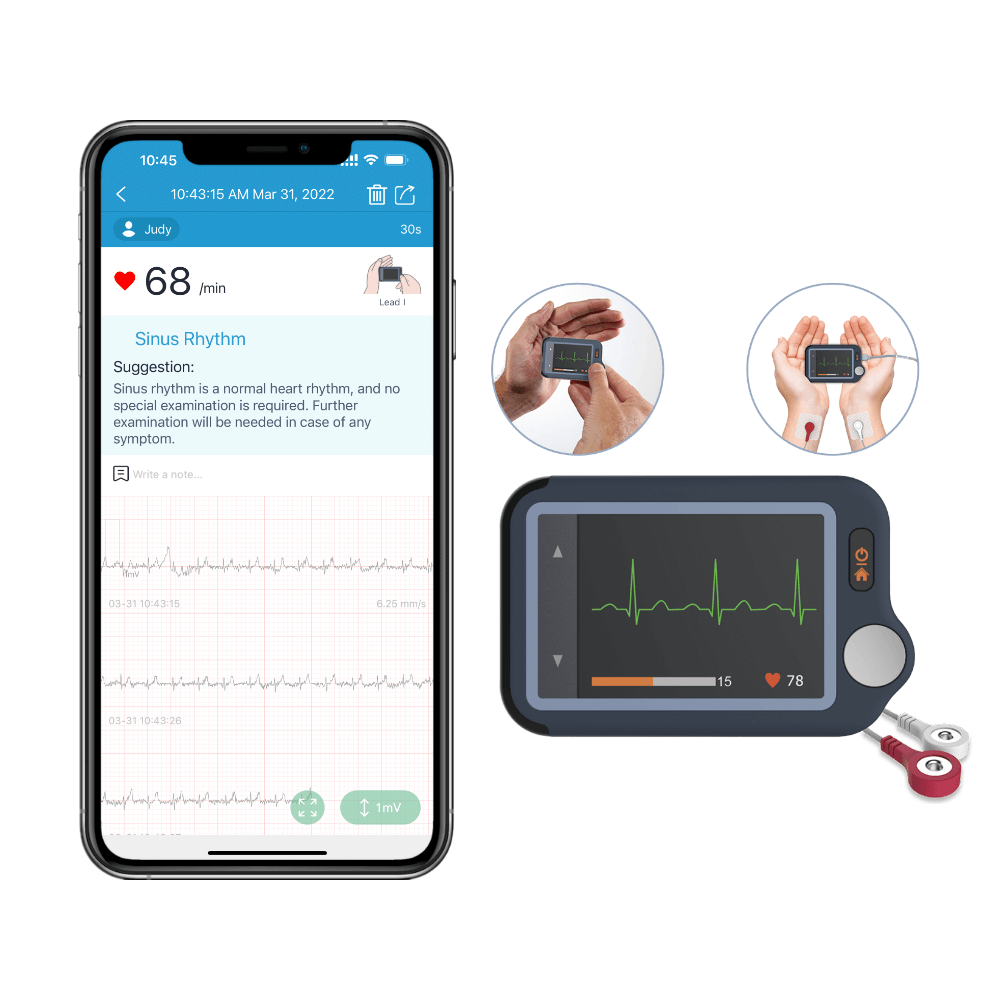
Quick answer: The leading portable ECG monitors for home use in 2026 are the Touchscreen ECG Monitor, 12-Lead Pocket ECG Machine, and 24-Hour ECG Monitor. Your choice should reflect your monitoring goals: rapid spot checks, multi-lead snapshots, or continuous arrhythmia screening. Focus on lead count, recording modes, artifact handling, PDF/app export, and how easily your results can be shared with your clinician.
Quick Verdict: Best Portable ECG Monitors for Home Use
| Device | Best For | Lead Count | Capture Speed/Modes | Artifact Handling | Report Export | Subscription Required | Clinician Compatibility | Actions |
|---|---|---|---|---|---|---|---|---|
| Quick home checks, sharing via app/PDF | Single-lead | 30/60s/5min spot checks | Noise-reduction, on-screen review | PDF, app/cloud | No | App, PDF export to clinician | ||
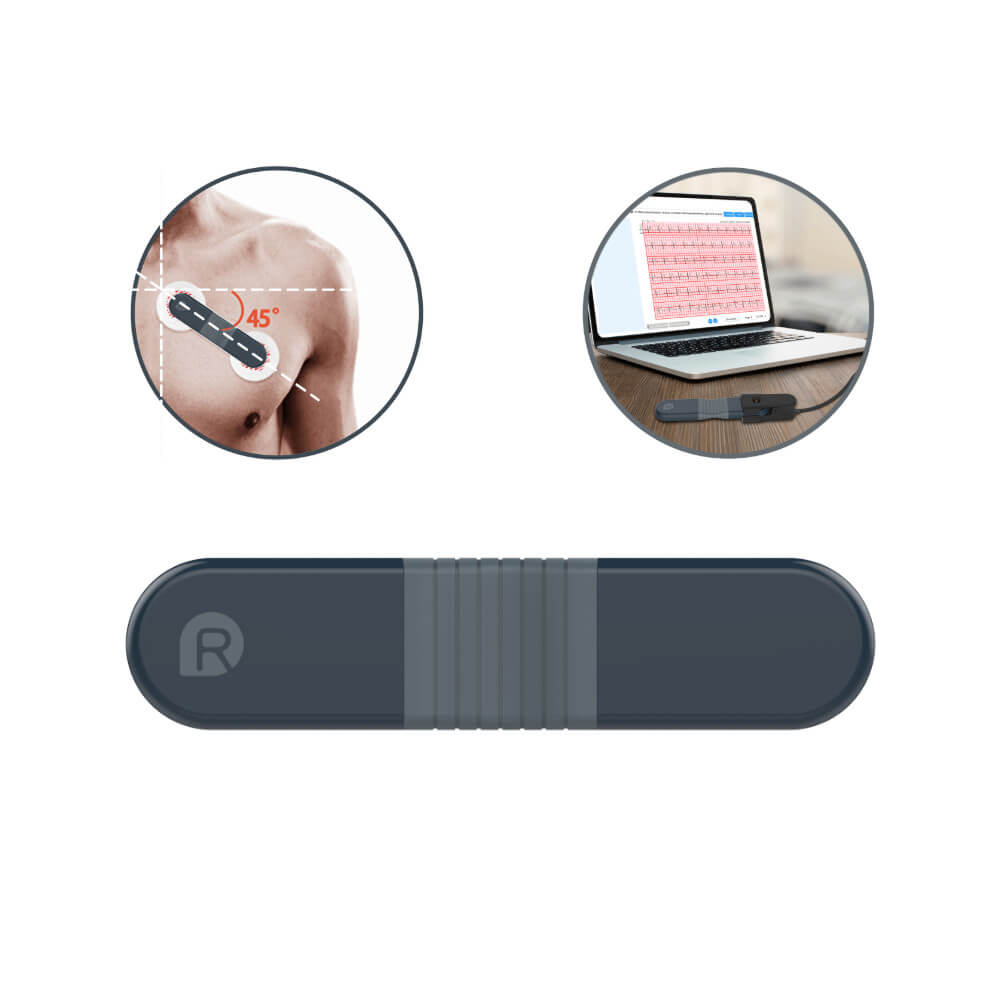
| Detailed rhythm analysis, multi-lead snapshots | 6/12-lead | 30s spot checks | Disposable electrodes, mobile artifact reduction | Wireless/email, PDF | No | PDF/email export, professional review | ||
| 24-Hour ECG Monitor | Continuous arrhythmia tracking, symptom logs | Single-lead, continuous | 24/72 hour logging | AI artifact review, event flagging | App/PDF export | No | Shareable reports for clinician |

Who This Guide Helps
- People who want to monitor heart rhythm at home between clinic visits
- Caregivers or family members of those at risk for arrhythmia, with physician guidance
- Clinicians seeking to recommend practical, export-friendly home ECG solutions for follow-up
When to Consider Another Option
- Anyone needing continuous hospital-level supervision or immediate emergency care
- Situations requiring instant clinical response to life-threatening arrhythmias
- Complex pediatric or rare cardiac conditions not supported by device or outside home use scope
Key Decision Criteria for Portable ECG Monitors
- Lead Count & Configuration: More leads (e.g., 12-lead) offer richer data, but single-lead is sufficient for rhythm screening at home.
- Capture Speed & Duration: Touchscreen and pocket ECGs capture 30–60 second snapshots; 24-hour monitors record continuously for arrhythmia detection missed in brief checks.
- Artifact Handling: Look for devices with noise reduction or AI artifact review to reduce misleading results.
- Report Export: PDF and app/cloud export allow you to share results with your clinician. Some devices offer direct email or app sharing.
- Subscription Requirements: Most current models do not require ongoing fees. Always check for hidden costs tied to software or report access.
- Clinician Compatibility: Choose a device that lets you export readable reports (PDF preferred) and confirm your provider is comfortable interpreting them.
Product Comparison Table: Portable ECG Devices (2026)
| Device | Pros | Cons | Lead Count | Capture Modes | Artifact Handling | Export Options | Subscription Needed | Clinician Sharing | Actions |
|---|---|---|---|---|---|---|---|---|---|
| Portable, fast checks, shareable reports | Not for diagnosis, hand placement required | Single-lead | 30s/60s/5min spot | Noise reduction | PDF, app/cloud | No | PDF/app | ||
| 6/12-lead, professional export, mobile | Not for diagnosis, electrode placement | 6/12-lead | 30s spot | Disposable electrodes | Wireless, PDF, email | No | Email/PDF | ||
| 24-Hour ECG Monitor | Continuous data, AI insights, portable | Learning curve | Single-lead | 24/72h continuous | AI artifact review | App, PDF export | No | App/PDF |
Evidence, Methodology, and Regulatory Considerations
- All device details are drawn from official manufacturer sources and FDA device resources.
- Lead count, report export, and artifact handling were prioritized based on clinical utility for home and caregiver use.
- None of these devices replace professional diagnosis or continuous clinical monitoring. Always verify FDA status for your intended use via the FDA database.
- For personal ECG use, confirm your healthcare provider is comfortable interpreting exported reports.
Limitations & What to Verify Before Buying
- Is this device cleared, listed, or registered with the FDA for your intended use? (Check FDA.gov)
- Does your clinician accept app, PDF, or email reports from this device?
- Will you need any ongoing subscriptions or app payments?
- Are there limitations on who can use the device (age, underlying conditions)?
- Can you reliably place electrodes or use the device as instructed?
- How will you address privacy and data sharing concerns?
FAQs: Portable ECG Monitors for Home Use
- What is the difference between a single-lead and a 12-lead portable ECG monitor?
Single-lead monitors are best for rhythm screening and basic checks; 12-lead devices provide a more complete picture of heart activity, closer to clinical ECGs, but require more setup. - Can I export my ECG reports as PDFs to share with my doctor?
Yes, all featured devices support PDF or app export, making it straightforward to share results with your healthcare provider. - Do portable ECG monitors require a subscription or ongoing fees?
The shortlisted devices do not require ongoing subscriptions for basic use and report export, but always verify with the manufacturer for current policy. - How do I know if a home ECG device is cleared or listed by the FDA?
Check the device’s listing on the FDA device database, and confirm with the manufacturer. - Which portable ECG device is best for continuous home monitoring?
The 24-Hour ECG Monitor with Screen is best suited for continuous rhythm tracking and arrhythmia screening at home.
Final Pre-Purchase Workflow Check
Before choosing a portable ECG monitor, run the reporting workflow backward from your clinician's needs. Ask whether the office accepts a PDF, an app share link, or raw rhythm files, then request a sample export from the manufacturer. A useful portable ECG PDF report export should show the recording date, duration, lead or capture mode, symptom notes, and a readable rhythm strip. Also price replacement electrodes, cables, or patches; confirm whether reports work without a subscription; and check that the app still supports your phone or computer. Complete one test recording and export during the return window rather than discovering a compatibility problem after symptoms occur.
Conclusion
When selecting a portable ECG monitor for home use, balance your need for spot checks, multi-lead detail, or continuous tracking with practical features like artifact handling and exportable reports. The Touchscreen ECG Monitor, 12-Lead Pocket ECG, and 24-Hour ECG Monitor each address different use cases—from quick self-checks to robust arrhythmia screening. Always verify regulatory status, data-sharing workflow, and device limitations with your clinician before starting home ECG monitoring.
This article is for educational purposes and does not substitute for professional medical advice or a clinical diagnosis. Always consult a healthcare provider regarding health concerns or before acting on device readings.
Related reading
Sources and verification
Last checked: August 24, 2026
-
Personal ECG Monitor with AI Analysis. Get ECGs & Results on Touchscreen or APP. – Wellue
Take ECG on your palm or take noise-free ECG with external cable as you like. Enable to take ECGs for kids with external cable. 30 seconds/60seconds/5minutes recording duration for choose.
-
Mobile 6/12-Lead EKG/ECG Machine Fits into Your Pocket, with Auto Interpretation, Wirelessly Share ECG Report via Email – Wellue
With extra 60 Pcs of disposable electrode patches for free now! *For use by qualified, trained or licensed healthcare professionals With extra 60 Pcs disposable electrode patches for free now!
-
24/72-Hour ECG Monitor with Screen, Screen for Arrhythmias with AI Analysis – Wellue
Continuous ECG Monitoring and AI Insights on the Go Continuous ECG Monitoring and AI Insights on the Go See what a resting ECG may miss, and streamline the path to care. The Wellue ECG Recorder enables continuous at-home ECG monitoring, generates detailed reports, and lets you share flagged events with your doctor in advance.
-
Medical Devices | FDA
The .gov means it’s official.Federal government websites often end in .gov or .mil. Before sharing sensitive information, make sure you're on a federal government site. The site is secure. The https:// ensures that you are connecting to the official website and that any information you provide is encrypted and transmitted securely. An update on the Cyclospora outbreak available here.
-
High Blood Pressure - What Is High Blood Pressure? | NHLBI, NIH
An official website of the United States government Official websites use .gov A .gov website belongs to an official government organization in the United States. Secure .gov websites use HTTPS A lock ( A locked padlock ) or https:// means you’ve safely connected to the .gov website. Share sensitive information only on official, secure websites.
-
High blood pressure (hypertension) - Symptoms & causes - Mayo Clinic
High blood pressure is a common condition that affects the body's arteries. It's also called hypertension. If you have high blood pressure, the force of the blood pushing against the artery walls is consistently too high. The heart has to work harder to pump blood. Blood pressure is measured in millimeters of mercury (mm Hg). In general, hypertension is a blood pressure reading of 130/80 mm Hg or higher. The American College of Cardiology and the American Heart Association divide blood pressure into four general categories. Ideal blood pressure is categorized as normal.