
Monitoring for atrial fibrillation (AFib) at home is easier than ever—but choosing the right heart monitor depends on your symptoms, monitoring goals, and how you'll share results with your healthcare provider. Here’s how to pick the best device for your needs, what to check before you buy, and practical tips for getting reliable readings at home.
Quick Verdict: Which Heart Monitor for AFib Suits You?
Not every AFib episode is alike, and not every home heart monitor fits every user. Choose based on how often your symptoms occur, how long you need to monitor, and your clinician’s requirements for reviewing reports.
| Device | Best For | Recording Duration | Lead Type | Report Export | Actions |
|---|---|---|---|---|---|
| Frequent, unpredictable symptoms; detailed clinical review | 24 hours | Multi-lead (12) | Downloadable | ||
| Occasional symptoms; quick spot-checks | 30 sec – 5 min | Single-lead | App + export | ||
| 24-Hour ECG Monitor | Intermittent symptoms over a day | 24/72 hours | Single-lead | App + export |
Who Benefits Most from Each Device?
- 12 Channel Holter Monitor: For those needing extended, clinical-grade monitoring—especially if your palpitations or irregular rhythm are unpredictable or frequent.
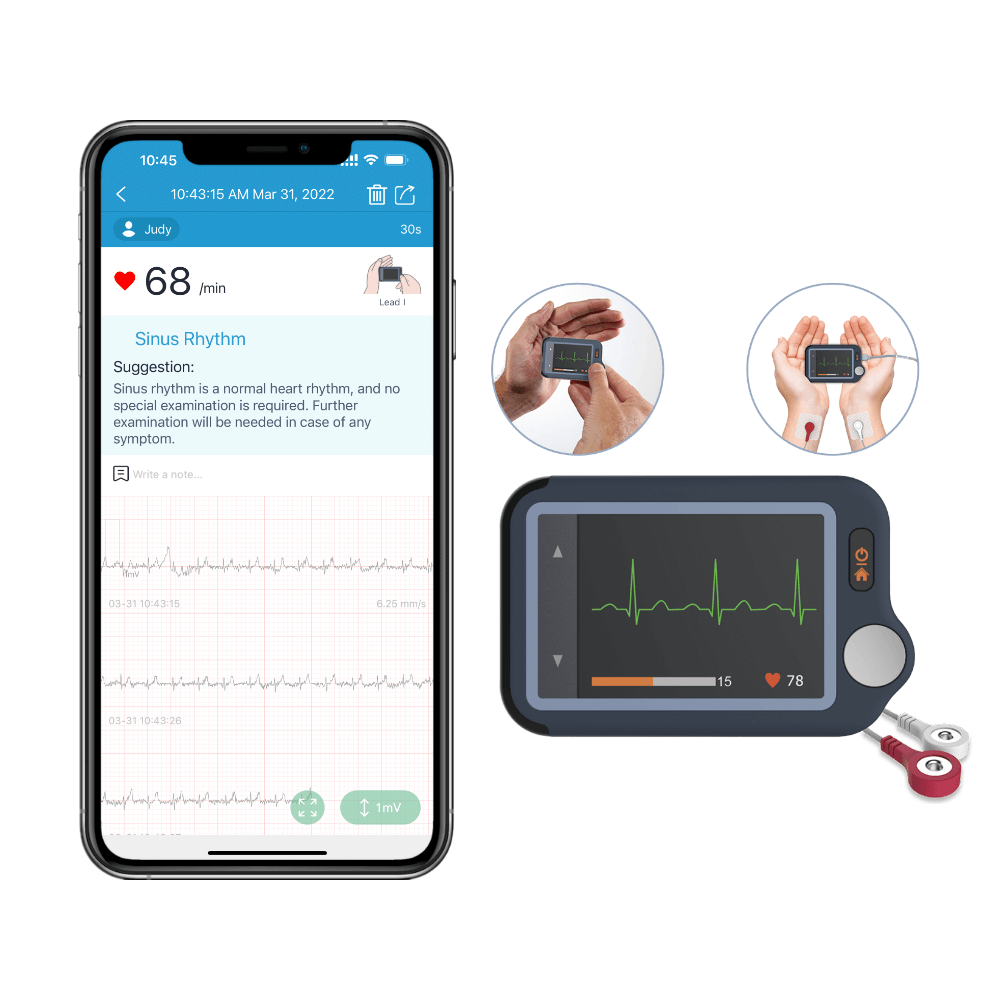
- Touchscreen ECG Monitor: Best for people who experience occasional AFib episodes and want a portable, easy-to-use device for quick checks.
- 24-Hour ECG Monitor: Ideal for users whose symptoms come and go but may not occur every day.
Who Should Use a Home Heart Monitor for AFib?
- People with Intermittent Palpitations or Suspected Arrhythmias: If you’ve had episodes that are brief or hard to catch in a clinic, a home ECG monitor can help document them.
- Individuals Referred by a Healthcare Provider: If your doctor suggests home monitoring, it’s often to capture events missed in short office ECGs.
- Those Needing Documentation for Clinical Review: If your care depends on capturing and sharing ECG events, a home monitor can streamline the path to diagnosis and treatment.
Who Should Consider a Different Monitoring Approach?
- When Immediate Medical Evaluation Is Needed: If you feel faint, have chest pain, or worsening symptoms, seek in-person care—home devices are not emergency tools.
- Users with Implanted Cardiac Devices: Home monitors may not read accurately or could give conflicting data; always consult your cardiologist.
- Those Unable to Manage Device Setup or Data Transfer: If you’re not comfortable with basic device setup or computer use, consider a monitoring solution managed by a clinic.
How We Evaluate Home Heart Monitors for AFib
- Sources: We rely on manufacturer specs, FDA device listings, and published product documentation for all details. No claims of FDA clearance are made unless confirmed by FDA.gov.
- Criteria: Key factors include recording duration, lead configuration, data export/reporting, user-friendliness, and compatibility with clinician workflows.
- Limitations: Some devices are registered or listed but not FDA-cleared specifically for AFib diagnosis. Verification is required.
Key Factors: How to Choose the Right Heart Monitor for AFib
1. Symptom Frequency: Occasional vs. Frequent Episodes
If your palpitations are rare, a spot-check device like the Touchscreen ECG Monitor may suffice. For daily or unpredictable symptoms, consider a 24-hour or 12-channel Holter.
2. Recording Duration: Spot Checks vs. 24+ Hour Monitoring
Short recordings (30 seconds to 5 minutes) are best for symptoms that happen at known times. Longer monitors (24 hours or more) are necessary for events that occur randomly.
3. Lead Configuration: Single vs. Multi-Lead ECGs
Single-lead ECGs (like most personal EKG monitors) are convenient and good for rhythm checks, but multi-lead Holters capture more information and may help your provider distinguish AFib from other arrhythmias.
4. Report Format & Data Export Options
Choose a device that lets you export or share PDF reports easily. Most Wellue models support app integration and export, but always confirm your provider accepts these files.
5. Integration with Clinician Workflow
Before buying, ask your provider if they accept home ECG reports and in what format. Some clinics require specific software or file types.
Product Shortlist: Best Home ECG Monitors for AFib
- 12 Channel Holter Monitor: Extended, multi-lead ECG for thorough documentation. Pros: Robust data, clinical-style insights. Cons: More involved setup.
- Touchscreen ECG Monitor: On-demand, palm or cable-based ECGs. Pros: Portable, user-friendly, app support. Cons: Not a full diagnostic device.
- 24-Hour ECG Monitor: Continuous rhythm tracking for up to 72 hours. Pros: Portable, continuous data. Cons: Learning curve.
Product Comparison Table
| Device | Recording Type | Lead(s) | Key Feature | Reports | Actions |
|---|---|---|---|---|---|
| 24 hours, multi-lead | 12 | Thorough rhythm analysis | Downloadable | ||
| Spot (30 sec – 5 min) | 1 | Quick checks, portable | App + export | ||
| 24-Hour ECG Monitor | 24/72 hours, single-lead | 1 | Continuous, wearable | App + export |
Practical Limitations & What to Verify Before Buying
- Regulatory Status: Check if the device is FDA-cleared, registered, or merely listed. Most home ECGs are registered/listed, not cleared for AFib diagnosis. Confirm status at FDA.gov.
- Device Accuracy & User Training: Read the manual and watch setup videos to ensure correct electrode placement and operation.
- Data Security: Ensure the device/app secures your personal data.
- Provider Compatibility: Can your clinician read and interpret the exported reports?
- Physical Comfort & Battery Life: Does the device suit your lifestyle and comfort needs for the intended duration?
Checklist: Key Points to Confirm Pre-Purchase
- Is the device’s report format accepted by your provider?
- Do you need multi-lead or single-lead ECG?
- Can you manage the setup and data transfer?
- Is the device registered or cleared with the FDA for your intended use?
How to Set Up and Use Your Home Heart Monitor Safely
- Read the manual and charge the device fully.
- Follow step-by-step electrode placement instructions. For spot-check monitors, hold as directed or use external cables if available.
- Perform a test recording and check for signal quality (no noise or artifacts).
- Export a sample report and confirm readability before starting extended monitoring.
- Contact support if you see error messages, signal loss, or if the device fails to record properly.
Note: Home ECG monitors are for documentation, not emergency use or self-diagnosis. Always consult a healthcare provider for interpretation and next steps.
Evidence Base & Ongoing Verification
- Published studies and regulatory listings support home ECG use for rhythm documentation but not formal AFib diagnosis (unless FDA-cleared for that indication).
- If you have unexplained symptoms or device readings are unclear, consult your provider.
- This guide is updated as new evidence and regulatory information become available. Always verify device status before purchasing.
Summary: Matching Your Needs to the Right Device
Choosing the best home heart monitor for AFib comes down to matching your symptom frequency, monitoring needs, and your provider’s workflow. For brief, infrequent episodes, a portable touchscreen ECG is quick and easy. For unpredictable or frequent arrhythmias, a 24-hour or multi-lead Holter monitor offers more thorough documentation. Always confirm your provider can use your device’s reports and that you’re comfortable with setup and use. Never use a home ECG as a substitute for professional medical care if you feel unwell or have new symptoms.
Related reading
Sources and verification
Last checked: August 24, 2026
-
Personal ECG Monitor with AI Analysis. Get ECGs & Results on Touchscreen or APP. – Wellue
Take ECG on your palm or take noise-free ECG with external cable as you like. Enable to take ECGs for kids with external cable. 30 seconds/60seconds/5minutes recording duration for choose.
-
24/72-Hour ECG Monitor with Screen, Screen for Arrhythmias with AI Analysis – Wellue
Continuous ECG Monitoring and AI Insights on the Go Continuous ECG Monitoring and AI Insights on the Go See what a resting ECG may miss, and streamline the path to care. The Wellue ECG Recorder enables continuous at-home ECG monitoring, generates detailed reports, and lets you share flagged events with your doctor in advance.
-
Medical Devices | FDA
The .gov means it’s official.Federal government websites often end in .gov or .mil. Before sharing sensitive information, make sure you're on a federal government site. The site is secure. The https:// ensures that you are connecting to the official website and that any information you provide is encrypted and transmitted securely. An update on the Cyclospora outbreak available here.
-
High Blood Pressure - What Is High Blood Pressure? | NHLBI, NIH
An official website of the United States government Official websites use .gov A .gov website belongs to an official government organization in the United States. Secure .gov websites use HTTPS A lock ( A locked padlock ) or https:// means you’ve safely connected to the .gov website. Share sensitive information only on official, secure websites.
-
High blood pressure (hypertension) - Symptoms & causes - Mayo Clinic
High blood pressure is a common condition that affects the body's arteries. It's also called hypertension. If you have high blood pressure, the force of the blood pushing against the artery walls is consistently too high. The heart has to work harder to pump blood. Blood pressure is measured in millimeters of mercury (mm Hg). In general, hypertension is a blood pressure reading of 130/80 mm Hg or higher. The American College of Cardiology and the American Heart Association divide blood pressure into four general categories. Ideal blood pressure is categorized as normal.