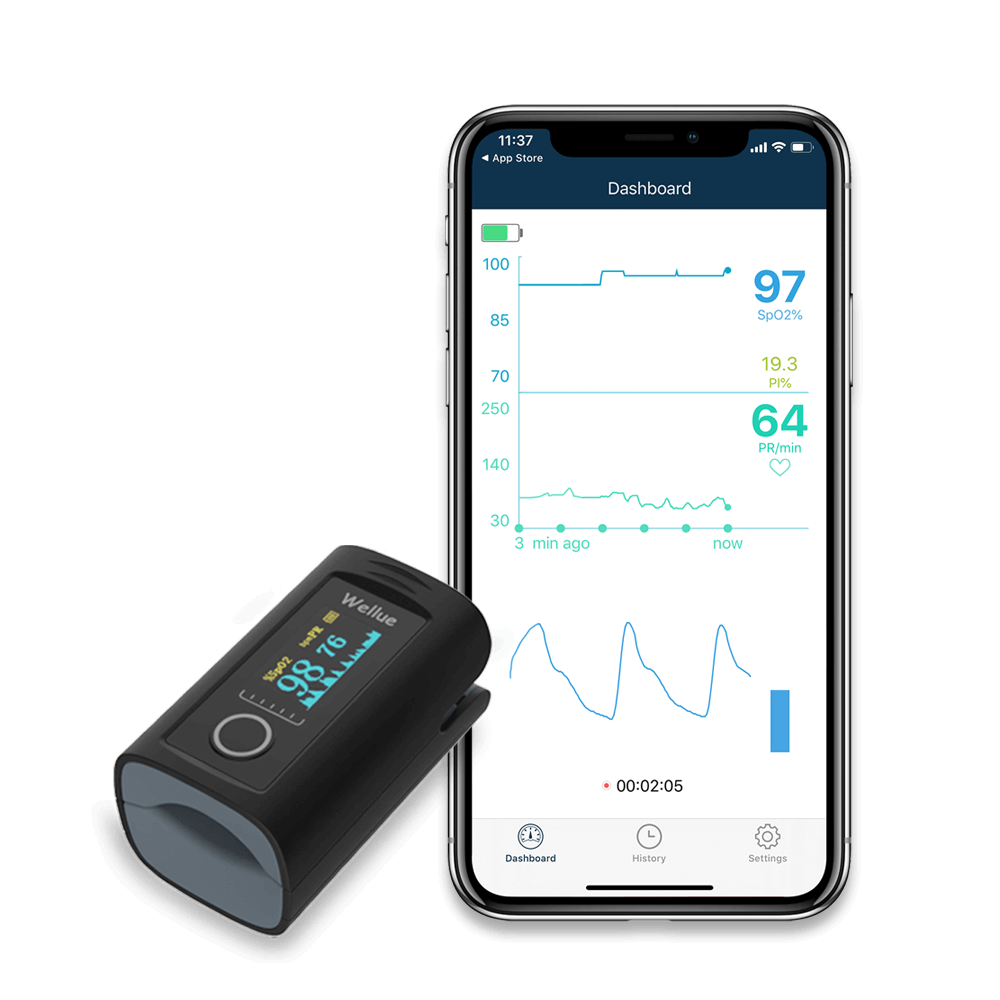
Blood oxygen sensors—commonly called pulse oximeters—measure how much oxygen is in your blood by shining red and infrared light through or onto your finger (or another site). They detect changes in light absorption caused by blood oxygen levels, giving you a quick, needle-free estimate of your SpO2. To get reliable results, you need a good fit, steady hand, and proper placement.
Who This Guide Helps
- Anyone tracking overnight oxygen at home
- Users of fingertip pulse oximeters, such as the Smart Fingertip Pulse Oximeter
- Caregivers or family monitoring SpO2 for chronic lung or sleep conditions
- Anyone wanting to understand how home oxygen sensors really work
Who Should Choose Another Option
- People requiring continuous, clinical-grade oxygen monitoring (ask your healthcare provider about hospital-grade devices)
- Those with severe circulation disorders—finger sensors may be unreliable if blood flow is very poor
- Users mainly interested in home blood pressure or ECG monitoring—see our dedicated guides for those needs
How Blood Oxygen Sensors Work: The Light Path Principle
Pulse oximetry is based on a simple principle: oxygen-rich and oxygen-poor blood absorb red and infrared light differently. The device shines two types of light—one red, one infrared—either through (transmissive) or onto (reflectance) your skin. The sensor on the other side (or next to the light) detects what comes through or bounces back.
- Transmissive SpO2 sensors (like most fingertip oximeters) pass light through the finger, measuring on the opposite side.
- Reflectance SpO2 sensors (used in some wearables or forehead sensors) shine light onto the skin and measure reflected light nearby.
The device then uses the difference in light absorption between red and infrared wavelengths to estimate your blood oxygen percentage.
Example: The Smart Fingertip Pulse Oximeter uses the transmissive method, with a snug spring-loaded clip and dual LEDs to track overnight oxygen trends.
Why Movement Affects Blood Oxygen Sensors
When you move your hand or finger, the light path changes unpredictably—causing signal errors or "artifacts." The sensor may confuse motion (or pressure changes) with real blood flow, producing unreliable readings. This is why oximeters recommend steady hands and minimal talking during use.
Other Key Factors: Skin Contact, Perfusion, Ambient Light
- Good skin contact: Ensures the light passes only through your tissue and not air gaps.
- Perfusion (blood flow): Cold fingers or poor circulation mean less blood, making the signal weaker or noisy.
- Ambient light: Bright sunlight or strong indoor lights can "leak" into the sensor, confusing its readings.
Evidence, Methodology, and Regulatory Status
According to the FDA, home-use pulse oximeters are typically registered and may be cleared if they meet certain standards. The Wellue Smart Fingertip Pulse Oximeter is listed as FDA-cleared for home use based on its product documentation. Always check current device status on the FDA medical device database for confirmation.
Practical Limitations and Common Pitfalls
- Cold fingers: Low blood flow means poor signals—warm your hands before testing.
- Nail polish or artificial nails: Can block light, leading to errors—remove polish if possible.
- Dark skin tone or thick skin: May slightly reduce accuracy, though most sensors are calibrated across a range of tones.
- Heavy motion: Causes artifacts—stay as still as possible during readings.
- Low battery or poor fit: Can cause intermittent readings—ensure a snug, comfortable fit and fresh batteries.
Note: At-home SpO2 readings are for monitoring and trends, not for diagnosing or managing medical emergencies. Always contact a healthcare professional if you have symptoms or concerns.
What to Verify Before Buying or Using a Blood Oxygen Sensor
- Is the device FDA-cleared or registered for home use?
- Does it offer clear display, robust build (splash/drop resistance), and a comfortable fit?
- Are app syncing and data export features reliable? (The Wellue app is generally straightforward but check recent user reviews for updates.)
- Are there known quirks? (Some users note screen orientation issues with left vs right hand use.)
Product Table: Smart Fingertip Pulse Oximeter Overview
| Product | Method | Continuous Tracking | App Support | FDA Status | Durability | Special Features | Actions | Actions |
|---|---|---|---|---|---|---|---|---|
| Transmissive (red + IR light) | Yes (overnight) | iOS/Android, export | FDA-cleared* | Splash/drop resistant | Vibration alerts, trend reports |
*FDA clearance per manufacturer; verify on FDA.gov for latest status.
Summary: Making Sense of Your Readings
Pulse oximeters estimate your blood oxygen by passing red and infrared light through your skin and measuring absorption changes. For reliable results, use the device as directed, minimize motion, and ensure a good fit. If you see unexpected readings, warm your hands and double-check your technique. Always consult a healthcare professional if your readings seem off or if you have symptoms—at-home devices are for monitoring, not diagnosis or emergency management.
A Repeat-Reading Protocol for Suspect Results
Understanding reflectance vs transmissive SpO2 sensor design does not remove the need for a careful repeat check. If a value looks unusual, warm the hand, remove obvious light or motion interference, reseat the sensor, and wait for the pulse display to stabilize. Compare the number with how you feel and with your usual trend, not with a single isolated sample. Repeat the reading under the same conditions and record the device, finger or placement, time, and activity. Different sensor designs can react differently to movement, fit, skin contact, and circulation. Persistent low values, sudden changes, or symptoms require professional medical guidance rather than repeated device troubleshooting.
Related reading
Sources and verification
Last checked: August 24, 2026
-
Wellue Bluetooth Wireless Fingertip Pulse Oximeter. iOS & Android APP. SpO2 & Pulse Rate. FDA Approved.
*Bluetooth Version is Currently Shipped in Random Color,Gray or Blue Got it on sale and the price was great. The display is nice, and for the price I expected the app to be garbage. But it synced quickly and painlessly. I'll also add that if you see the reviews complaining about the iOS app not having all the features, it did when I downloaded it. The only complaint I have is minor. Which is that for a right hand dominant person, you probably stick this on your left hand, and not all the screens render in a direction that reads right side up that way. If they could have it cycle between the screens AND mirrored versions of the screens it'd be great, but that's a minor gripe.
-
Medical Devices | FDA
The .gov means it’s official.Federal government websites often end in .gov or .mil. Before sharing sensitive information, make sure you're on a federal government site. The site is secure. The https:// ensures that you are connecting to the official website and that any information you provide is encrypted and transmitted securely. An update on the Cyclospora outbreak available here.
-
High Blood Pressure - What Is High Blood Pressure? | NHLBI, NIH
An official website of the United States government Official websites use .gov A .gov website belongs to an official government organization in the United States. Secure .gov websites use HTTPS A lock ( A locked padlock ) or https:// means you’ve safely connected to the .gov website. Share sensitive information only on official, secure websites.
-
High blood pressure (hypertension) - Symptoms & causes - Mayo Clinic
High blood pressure is a common condition that affects the body's arteries. It's also called hypertension. If you have high blood pressure, the force of the blood pushing against the artery walls is consistently too high. The heart has to work harder to pump blood. Blood pressure is measured in millimeters of mercury (mm Hg). In general, hypertension is a blood pressure reading of 130/80 mm Hg or higher. The American College of Cardiology and the American Heart Association divide blood pressure into four general categories. Ideal blood pressure is categorized as normal.