
Reusable template · version 1.0 · 11 September 2026
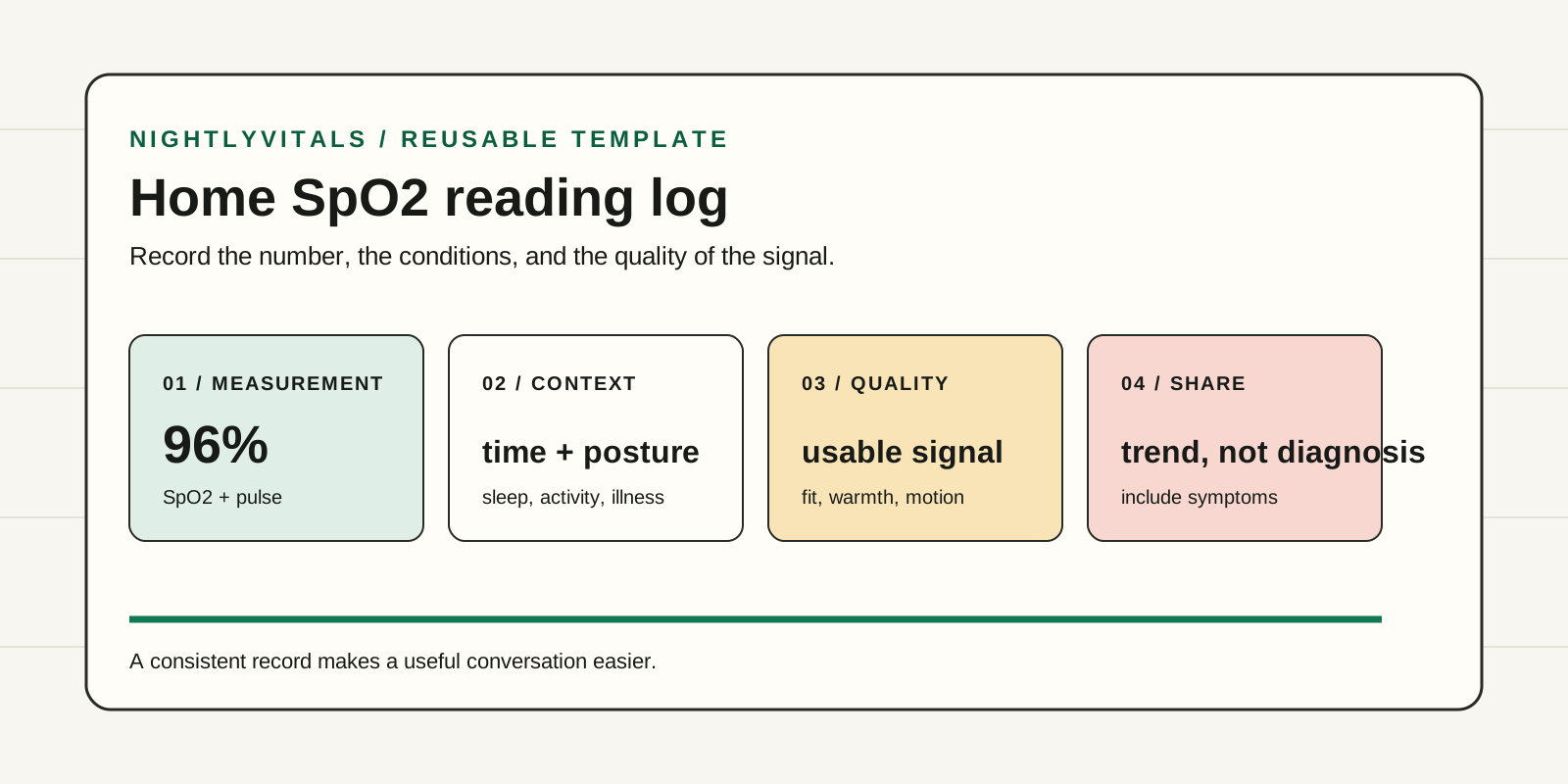
Short answer: a useful home SpO2 log records the date and time, oxygen estimate, pulse, symptoms, activity or sleep context, sensor conditions, and signal quality. The goal is to preserve what happened around the number so a clinician can judge the pattern more fairly.
This template is deliberately observational. It does not turn a home reading into a diagnosis, and it does not tell you to change oxygen, CPAP, or other treatment.
Open it in a spreadsheet, print selected columns, or adapt it to the fields your clinician asks you to track.
Why the number needs a context line
A pulse oximeter estimates oxygen saturation through light and usually displays SpO2, pulse rate, and sometimes a signal-strength indicator. FDA home-use guidance recommends following the device instructions, keeping the hand warm and still, waiting for a steady value, and recording the reading with the date and time. It also says to consider symptoms and other factors because poor circulation, skin temperature, skin pigmentation, movement, tobacco use, and nail polish can affect accuracy.
That is why a log should not be only a column of percentages. The same displayed value can mean different things when one measurement was taken after sitting quietly with a stable sensor and another was taken during movement with cold fingers.
The minimum useful log fields
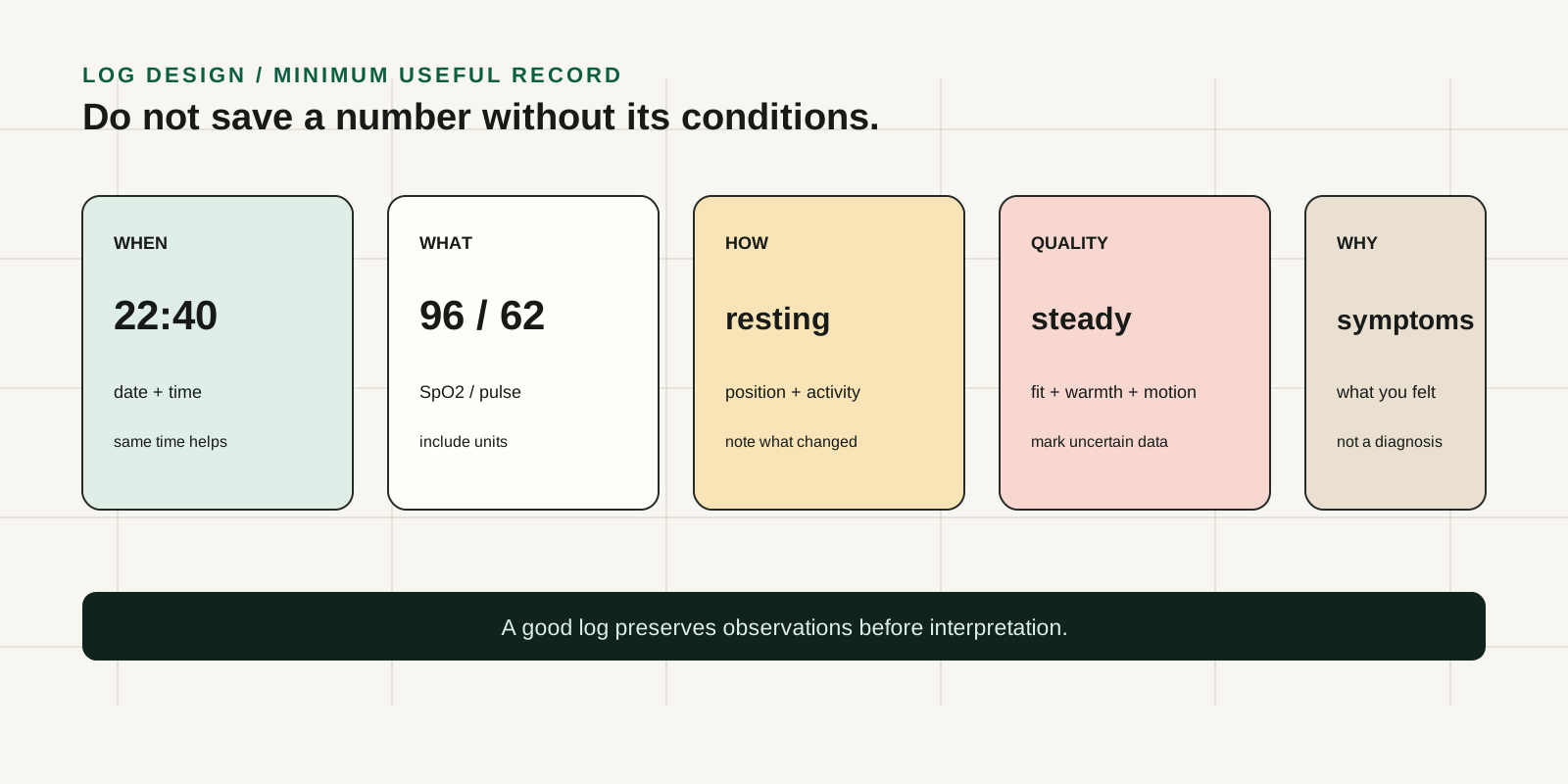
| Field | What to write | Why it matters |
|---|---|---|
| Date and time | Use a consistent clock and note whether the time is local. | It allows the reading to be matched with symptoms, sleep, activity, medication timing, and other records. |
| SpO2 | Copy the displayed percentage after the value settles. | A single value is an observation, not a diagnosis. Keeping the original value avoids memory-based rounding. |
| Pulse | Copy the displayed pulse rate when available. | It can add context, but a plausible pulse does not prove the oxygen signal is valid. |
| Context | Resting, walking, awake after a movement, asleep, at altitude, or during an illness. | It explains what was happening when the device collected the data. |
| Symptoms | Write what you felt, when it started, and whether it improved. | Symptoms belong beside the measurement because the device cannot diagnose the cause of a change. |
| Signal conditions | Warm or cold hand, motion, sensor fit, nail polish, or a repeated measurement. | These notes help identify a measurement problem before a physiological explanation is assumed. |
| Signal quality | Use the device label such as good, weak, fair, or invalid. | It tells the reader which parts of the record may be less reliable. |
A repeatable home reading protocol
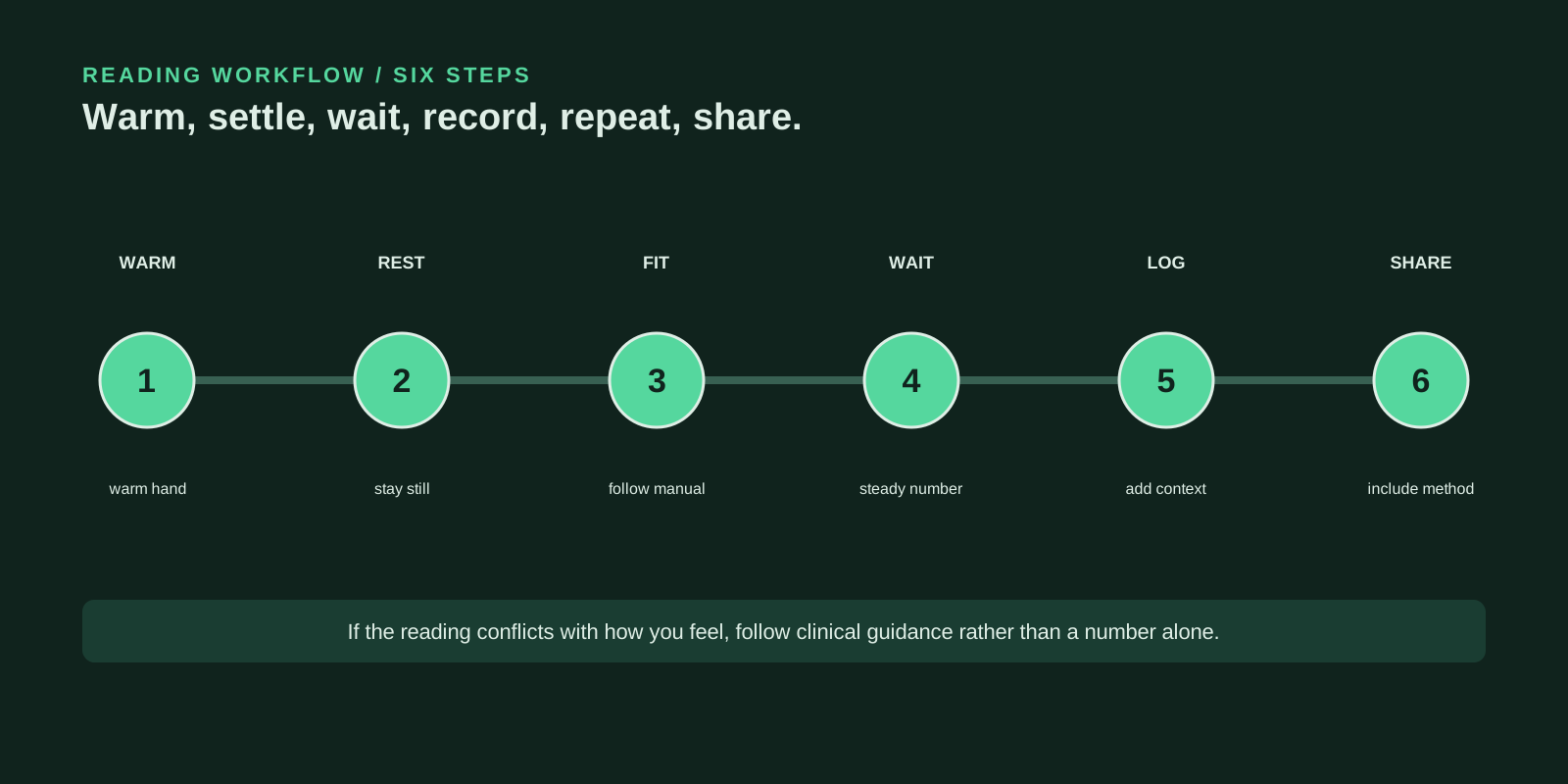
- Define the purpose. Follow the schedule given by your healthcare professional rather than checking continuously and reacting to every fluctuation.
- Prepare the sensor site. Follow the manufacturer instructions. Keep the hand warm and relaxed, remove nail polish from the measurement finger if appropriate, and sit still.
- Wait for a steady value. Record the displayed SpO2 and pulse only after the value stops changing rapidly. Note if the device never stabilizes.
- Record context immediately. Add the time, posture, activity, symptoms, and any reason the measurement may be unusual.
- Repeat only when the plan calls for it. A repeat can help identify a fit or movement problem, but repeated checking should not delay help when symptoms are severe.
- Keep the original record. Do not delete an unusual value; mark it as questionable and explain why.
How to describe a pattern without overclaiming
Use neutral descriptions first. Examples include: “three readings were collected at rest,” “the low value occurred after the sensor shifted,” “the value recovered after the hand was warmed,” or “the symptom started before the measurement.” These phrases preserve the timeline without claiming to know the cause.
For overnight records, note whether the device reports recording time or estimated sleep time. A home pulse oximeter may show a pattern that deserves discussion, but an oxygen log is not the same as a full sleep study. The AASM states that home sleep apnea testing must be ordered and interpreted by a medical provider, and that automatically scored data should not be the sole basis for diagnosis or treatment decisions.
Keep
The timestamp, displayed values, and the device's own signal-quality label.
Add
Symptoms, movement, temperature, position, illness, altitude, and any repeated measurement.
Flag
Values that never stabilized, occurred with a loose sensor, or were collected during motion.
Share
The complete record and its method, not just the lowest number copied into a message.
When the log is not enough
Follow your own care plan for concerning readings. If you have severe shortness of breath, chest pain or tightness, confusion, bluish lips or face, or rapidly worsening symptoms, seek urgent medical help according to local emergency guidance rather than waiting for a better-looking device value. A home log is useful evidence for a conversation; it is not a reason to delay urgent evaluation.
Reuse and citation
Suggested citation: NightlyVitals, “Home SpO2 Reading Log Template: What to Track Before You Call Your Clinician,” September 11, 2026. Template for structured observation; not a diagnostic instrument.
FAQ
Should I record every pulse oximeter reading?
Use the schedule recommended by your healthcare professional. A consistent planned record is usually more useful than constantly checking and reacting to isolated values.
Can this template diagnose sleep apnea?
No. It can organize observations for a clinician. Diagnosis requires an appropriate medical assessment and testing.
Should I delete a reading that looks wrong?
No. Keep it, mark the suspected quality problem, and record whether it changed after rest, warming, or repositioning.
Example rows: observation versus interpretation
The example rows in the download are intentionally ordinary. The first row describes a stable resting observation. The second row shows why context matters: the value was collected after movement, a symptom was present, and the sensor shifted. The correct editorial treatment is not to label the second row as a diagnosis. It is to mark the row for review, preserve the original value, and explain what happened before and after it.
When you create your own record, keep the language concrete. “Sensor moved while turning over” is stronger than “bad reading.” “Hands cold, warmed for two minutes, repeat higher” preserves a testable sequence. “Short of breath before reading” is more useful than “low oxygen caused symptoms,” because the log should record what was observed without pretending to establish causation.
Suggested note vocabulary
- Stable: the number settled and the sensor felt secure.
- Questionable: movement, poor contact, cold skin, or an unstable display was present.
- Repeated: the reading was collected again after the device instructions were followed.
- Symptom-linked: a symptom was recorded with its timing, without claiming what caused it.
This vocabulary makes the sheet easier for another person to scan. It also gives a healthcare professional a clearer starting point than a list of unexplained percentages.
Questions to bring with the log
Bring the device model, the relevant pages from the manual, and the complete log rather than only the lowest value. Ask whether the schedule is appropriate, whether the sensor site and fit are suitable, and whether the pattern should be evaluated with another test. If the device has an exported report, keep the original file and note the software version so the summary can be reproduced.
For people tracking overnight readings, ask whether the device measures continuous data, how it defines an event, whether it reports recording time or estimated sleep time, and how it marks invalid segments. Those questions do not make the device a clinical test; they prevent a consumer summary from being treated as more precise than its method allows.
Related reading
Sources and verification
Last checked: September 11, 2026
-
FDA: Pulse Oximeter Basics
Explains what SpO2 and pulse readings estimate, how to improve a home reading, and why symptoms and device limitations must be considered together.
-
AASM: Clinical use of a home sleep apnea test
States that a medical provider must order and interpret testing for diagnosis and that automatically scored data should not be the sole basis for treatment decisions.