
Keeping tabs on your heart rhythm doesn't have to involve a trip to the clinic or a tangle of wires. With the latest advancements, a Holter monitor for home use offers a practical way to track your heart's electrical activity over hours or even days. This guide walks you through what matters—how these devices work, what they can (and can't) do, and how to get reliable results at home.
Who this is for
If you need to monitor your heart rhythm outside the doctor's office—maybe you're managing arrhythmia symptoms, investigating unexplained palpitations, or seeking reassurance during daily life—a home Holter monitor puts powerful insights within reach. Patients recently advised to track their ECG, those who want to complement other home health devices, or caregivers supporting someone with cardiac risks will benefit most from this guide.
Key Takeaways
- Home Holter monitors allow for continuous ECG and rhythm tracking, making it easier to detect irregularities in real-life settings.
- Choosing the right device involves assessing comfort, battery life, data access, and regulatory safety.
- Proper setup, cleaning, and maintenance are crucial for reliable monitoring and device longevity.
- Comparing Holter monitors with other home ECG and rhythm monitoring options helps users select the best fit for their needs.
- Always consult a healthcare professional if your report shows concerning patterns or symptoms.
Understanding Holter Monitors for Home Use
What is a Holter Monitor and How Does It Work?
A Holter monitor is a portable device that records your heart’s electrical activity (ECG) continuously, typically for 24-72 hours. Unlike a spot-check ECG, a Holter captures every beat, giving a realistic picture of how your heart behaves during work, sleep, and exercise. Most home-use models use comfortable adhesive electrodes, compact recorders, and, increasingly, smartphone apps for data review.
Differences Between Home ECG/Rhythm Monitoring and Clinical Devices
Home Holter monitors are designed for user-friendliness, portability, and easy data sharing. While clinical models may offer more extensive data channels or higher sampling rates, the gap is narrowing—especially for devices cleared by regulatory bodies like the FDA. Home-use models focus on comfort and simplicity, though they may not fully replace specialized, in-clinic diagnostics for complex arrhythmias.
Who Should Consider Home Use ECG or Holter Monitoring?
Anyone asked by their provider to monitor for palpitations, suspected arrhythmias, or unexplained symptoms may benefit. Those with known heart rhythm issues, or who want to supplement clinic visits with real-world data, are strong candidates. Always confirm with your healthcare team whether home monitoring is suitable for your needs.
Benefits of Holter Monitoring at Home
Continuous Heart Rhythm Tracking in Your Daily Life
Unlike single ECGs performed in a clinic, Holter monitors record continuously—capturing events that happen sporadically or during sleep. This is especially useful for detecting intermittent arrhythmias or symptoms that don’t occur on demand.
Early Detection of Irregular Heartbeats and Arrhythmias
By monitoring over a full day or longer, users and providers can spot patterns or rare events that might otherwise go unnoticed. Early identification allows for more informed decisions about next steps in care.
Empowering Patients with Accessible Cardiac Data
Modern devices, like the Checkme Pro Vital Signs Monitor, make it easy to view, export, and share ECG reports. This empowers patients to play a more active role in their cardiac health—while still keeping their provider in the loop.
Choosing the Right Holter Monitor for Home Use
Key Features to Consider
- Comfort: Look for lightweight, skin-friendly devices suitable for multi-day wear.
- Battery Life: Choose a monitor that can last at least 24 hours between charges or battery swaps.
- Data Access: Prioritize devices with easy app syncing and exportable reports for sharing with your provider.
Integration with Other Home Health Devices
Some monitors, such as the Checkme Pro, combine ECG with other vital sign tracking—like pulse oximetry. This can be valuable if you’re also watching for sleep apnea or overnight oxygen drops. Pairing with a wearable oxygen monitor may provide a broader snapshot of your overnight health.
FDA Guidance and Safety Considerations for Home Devices
Always check that your device meets regulatory standards (see FDA guidance). Look for clear labeling on intended use, and avoid devices marketed solely for “wellness” if you need medical-grade data.
Setting Up and Using Your Home Holter Monitor
How to Apply and Wear Your Holter Monitor Correctly
Follow manufacturer instructions for electrode placement—usually on clean, dry skin on your chest. Secure wires and the recorder so you can move freely without dislodging electrodes. Most devices are designed for daily activity and even sleep, but avoid submerging them unless explicitly rated as waterproof.
Tips for Maximizing Recording Quality During Everyday Activities
- Check electrode contact daily—poor adhesion is the most common reason for missing data.
- Keep a simple activity or symptom diary if your provider requests it; timestamps can help correlate symptoms with ECG events.
- Charge or swap batteries before long outings to avoid gaps in recording.
Troubleshooting Common Setup Issues
If your device isn’t recording, check for loose connections, depleted batteries, or app pairing problems. Most issues are resolved by reapplying electrodes and restarting the recorder. If persistent, consult your device’s support resources or your healthcare provider.
Reading and Interpreting Holter Monitor Reports
Accessing and Understanding Your ECG Data
Most home-use Holter monitors offer app-based dashboards with summaries of heart rate, rhythm, and flagged events. Some export PDF reports for your provider. Look for clear explanations of any irregularities—but remember, only a qualified professional can interpret subtle ECG findings.
When to Share Results with Your Healthcare Provider
If your device flags arrhythmias, pauses, or you experience symptoms like chest pain or fainting, contact your provider promptly. Even if you feel fine, routine sharing of reports helps build a complete health picture.
Recognizing Normal vs. Concerning Patterns
It’s common for healthy adults to have occasional extra beats or minor variations, especially during sleep or exercise. Sustained fast, slow, or irregular rhythms, or patterns that match symptoms, should always prompt a review by a professional.
Device Cleaning and Maintenance for Long-Term Use
Best Practices for Cleaning ECG Electrodes and Leads
Wipe down electrodes and leads with a soft, damp cloth after each use. Avoid harsh cleaners or submerging electronics. Replace disposable pads as recommended to prevent skin irritation and maintain good signal quality.
Storing and Transporting Your Monitor Safely
Store your device in a dry, cool place. Use a dedicated case to avoid cable tangles or accidental drops when traveling.
Battery Care and Replacement Tips
Rechargeable models should be topped up regularly and not left depleted for long periods. For devices using replaceable batteries, keep spares on hand and swap promptly when notified.
Holter Monitors vs. Other Home Heart Monitoring Devices
With many wearable heart monitors on the market, knowing when a Holter is best is key. Here’s a quick comparison:
| Device Type | Best For | Continuous Monitoring | Data Detail | Comfort/Convenience | Report Sharing | Winner/Use-Case | Actions |
|---|---|---|---|---|---|---|---|
| Suspected arrhythmias, unexplained symptoms | Yes (24–72h typical) | High (full ECG waveform) | Moderate (adhesive pads, compact device) | Yes (usually app + export) | Best for diagnostic depth | ||
| Spot checks, trend monitoring | No (manual spot checks) | Medium (single-lead, short recordings) | High (pocket-sized, quick use) | Yes | Best for quick checks | ||
| Wellness, occasional checks | No (user-initiated) | Low-Medium | Very high | Usually app only | Best for general wellness | ||
| Overnight oxygen trends, sleep tracking | Yes (overnight) | SpO2, pulse rate only | High (ring or wearable) | Yes | Best for sleep-related oxygen issues |


If you're unsure…
If you have frequent symptoms, need continuous rhythm data, or your provider requests detailed ECG tracking, a Holter monitor is likely the best fit. For quick peace of mind or periodic checks, a portable ECG or smartwatch may suffice. If monitoring overnight oxygen is your main concern—especially for sleep apnea risk—a dedicated oxygen monitor is the right tool.
When to Seek Medical Advice Based on Home Monitoring Results
Understanding the Limits of At-Home Heart Rhythm Devices
Home monitors are excellent for screening and trend tracking, but they don’t replace a full clinical evaluation. If your device flags sustained abnormal rhythms, or you develop symptoms such as chest pain, severe dizziness, or fainting, seek medical help promptly.
Red Flags That Warrant Professional Evaluation
- Rapid, sustained heart rates or significant pauses
- Persistent irregular rhythms
- Symptoms including chest pain, shortness of breath, or fainting
Additional Resources for Home Heart Health Monitoring
- See our Home ECG & Rhythm Monitoring: Complete Guide for in-depth device reviews.
- Need help setting up your device? Check our Device Setup & How-To Guides.
- For cleaning and care, visit our Device Cleaning & Maintenance Best Practices page.
- Watch for continued innovation—future Holter monitors will likely get even smaller, smarter, and easier to use as home care grows.
Product Snapshots
Checkme Pro Vital Signs Monitor
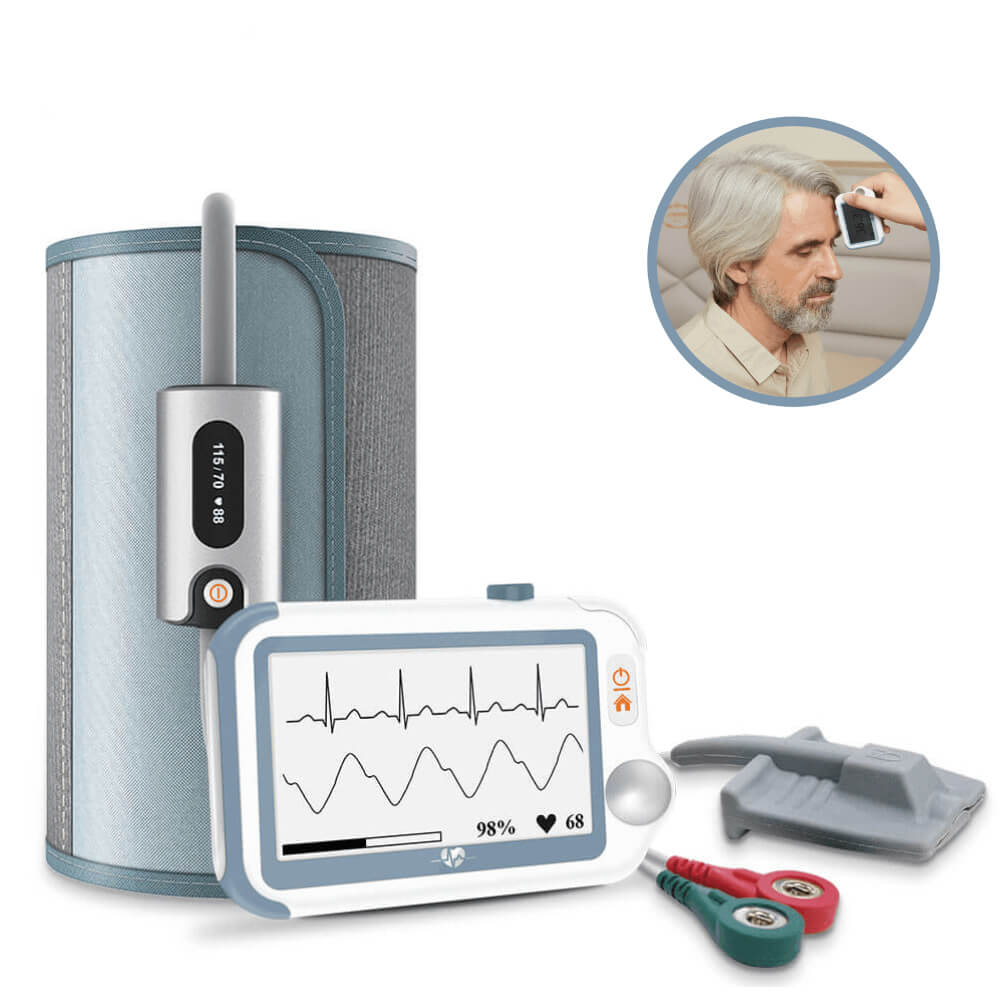
The Checkme Pro is best for users who want an all-in-one home health tool that covers ECG, pulse oximetry, and more in a single, compact device. Its user-friendly interface and clear reporting make it suitable for those new to home monitoring, while the app allows for easy sharing of results. One limitation is that its feature set, while broad, may not match the diagnostic depth of a clinical-grade Holter, but it excels for tracking trends and supplementing regular checkups. A real-world scenario: tracking heart rhythm and oxygen overnight to help guide discussions with your doctor about sleep-related symptoms.
Oxygen Monitor for Small Fingers

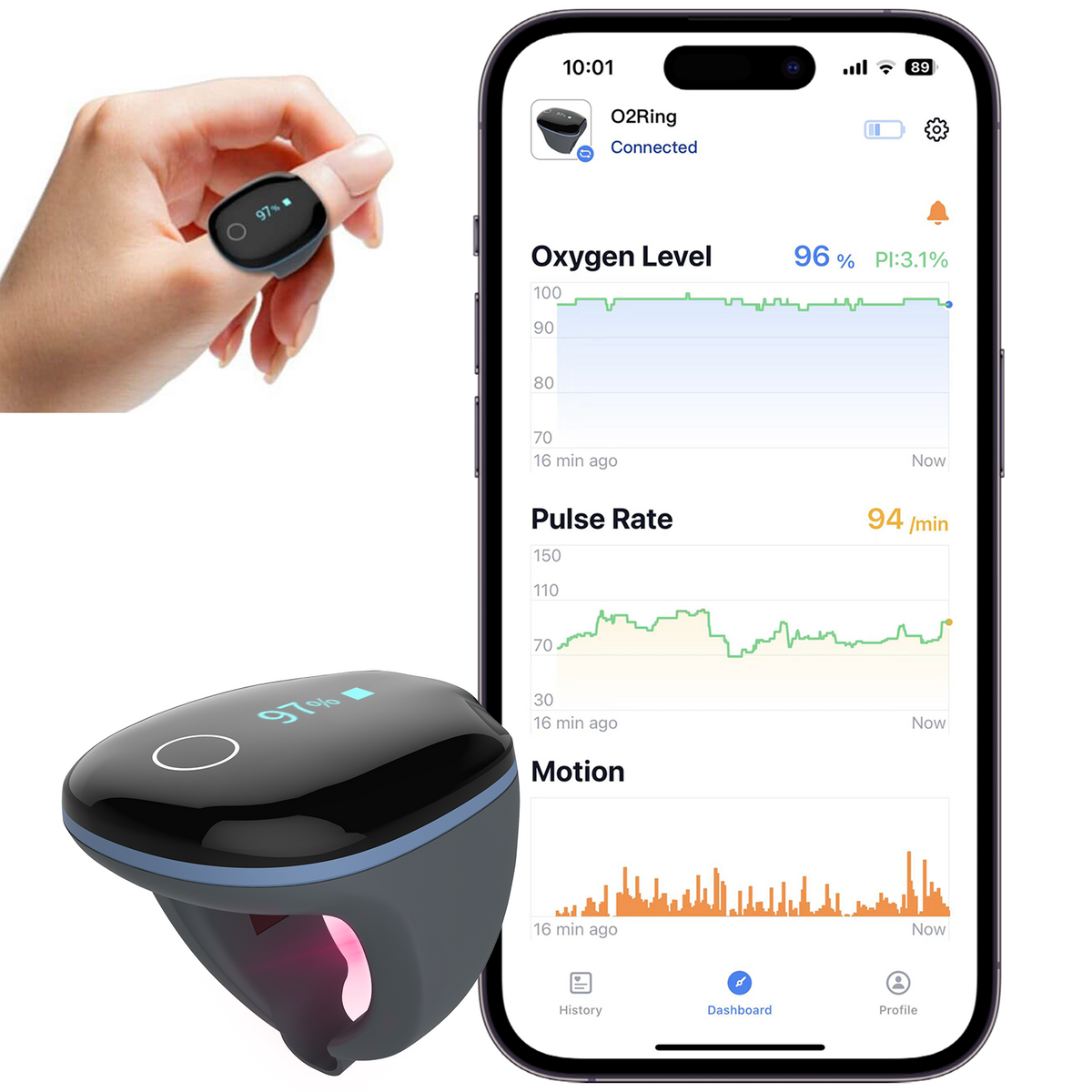
This compact, ring-style device is ideal for individuals focused on overnight oxygen trends—especially those with smaller fingers or who struggle with traditional clips. It provides continuous SpO2 and pulse rate monitoring, and app-based reports make reviewing nights simple. One limitation is the need for app setup and ensuring a proper fit, but its discrete form and gentle vibration alerts make it a strong choice for sleep monitoring. For instance, someone concerned about sleep apnea or nocturnal drops in oxygen can use this device to gather actionable trends.
Recommendation
For those seeking in-depth, continuous heart rhythm tracking at home, a Holter monitor remains the gold standard. If you want a versatile, easy-to-use device that covers ECG, pulse, and oxygen, the Checkme Pro Vital Signs Monitor is a practical starting point. For overnight oxygen trends and sleep-focused insights, the Oxygen Monitor for Small Fingers is a worthy alternative. Always review your results with your healthcare provider to get the most benefit from home monitoring.
Related reading
Sources and verification
Last checked: April 19, 2026
-
Oxygen Monitor for Small Fingers | Wearable Pulse Oximeter | Wellue
*This device is for General Wellness & Sports & Aviation use only and not intended for medical use. *This device is for General Wellness & Sports & Aviation use only and not intended for medical use. This ring is designed to provide a better, more secure fit for smaller finger sizes.
-
Touchscreen ECG Monitor with Oximeter. Oximeter Integrated with ECG/EKG, PI & Pulse Rate – Wellue
Oximeter Integrated with ECG/EKG, PI & Pulse Rate ECG Monitor Integrated with Blood Oxygen, PI & Pulse Rate. ECG Monitor Integrated with Blood Oxygen, PI & Pulse Rate.
-
Rolling stand for Patient Monitor. – Wellue
* Please note that the rolling stand for patient monitor and fetal monitor are different, please select the option you need.
-
Medical Devices | FDA
The .gov means it’s official.Federal government websites often end in .gov or .mil. Before sharing sensitive information, make sure you're on a federal government site. The site is secure. The https:// ensures that you are connecting to the official website and that any information you provide is encrypted and transmitted securely. Helping innovators, providers, and patients reimagine the home as an integral part of the health care system.
-
High Blood Pressure - What Is High Blood Pressure? | NHLBI, NIH
An official website of the United States government Official websites use .gov A .gov website belongs to an official government organization in the United States. Secure .gov websites use HTTPS A lock ( A locked padlock ) or https:// means you’ve safely connected to the .gov website. Share sensitive information only on official, secure websites.
-
High blood pressure (hypertension) - Symptoms & causes - Mayo Clinic
High blood pressure is a common condition that affects the body's arteries. It's also called hypertension. If you have high blood pressure, the force of the blood pushing against the artery walls is consistently too high. The heart has to work harder to pump blood. Blood pressure is measured in millimeters of mercury (mm Hg). In general, hypertension is a blood pressure reading of 130/80 mm Hg or higher. The American College of Cardiology and the American Heart Association divide blood pressure into four general categories. Ideal blood pressure is categorized as normal.