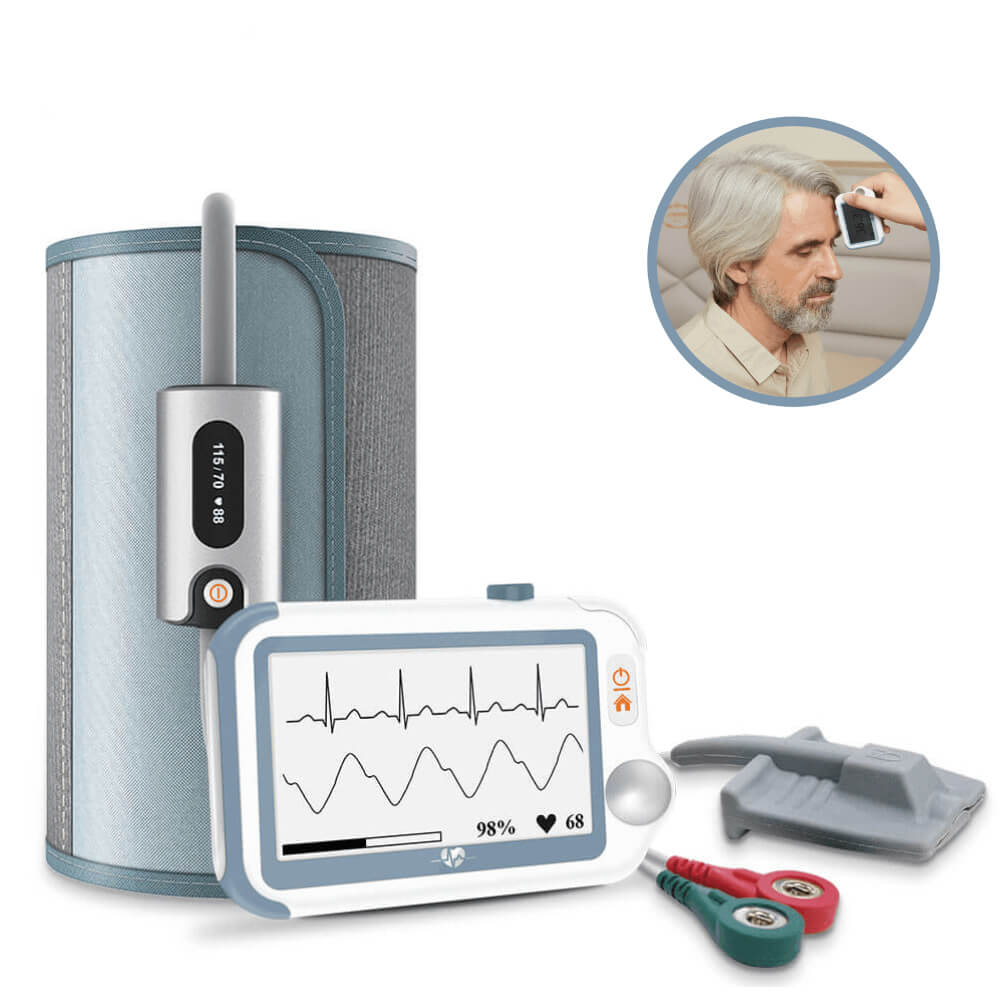
Quick answer: Combo pulse oximeter and blood pressure monitors—like the Checkme Pro Vital Signs Monitor—make it easier to track SpO2 and BP together, storing results in one place. However, separate devices may offer better fit options, reliability, and flexibility. Your choice should depend on how often you check both, your arm size, and your workflow needs.
Quick Verdict: Combo vs Separate Devices for SpO2 and BP at Home
| Feature | Combo Device | Separate Devices |
|---|---|---|
| Workflow | 1-button, single report | Use each device, combine data manually |
| Cuff Sizing | Usually fixed/standard | Wider range, more options |
| Data Export | Typically 1 app, 1 report | May need 2 apps, more flexible formats |
| Failure Isolation | If device fails, lose both functions | If one fails, other still works |
| Total Cost | Often similar, but 1 device to buy/replace | Can upgrade/replace individually |
When a Combo Device Makes Sense
- You’re tracking both blood pressure and oxygen at least weekly
- You prefer one app and unified reports
- Your arm fits a standard-size cuff
- You want a compact, travel-friendly setup
Top Recommendation in 2026
- Checkme Pro Vital Signs Monitor (Combo): Easiest workflow for multiple vitals; see pros/cons below.
- Touchscreen ECG Monitor with Oximeter + Wireless Blood Pressure Monitor (BP+EKG): Best if you need specialized cuff fit, modular upgrades, or separate devices.
Who Should Consider a Combo Pulse Oximeter Blood Pressure Monitor?
Home Users Tracking Multiple Vitals
If you check both SpO2 and BP regularly (for example, due to heart disease, sleep apnea, or chronic respiratory conditions), a combined device means fewer steps and less data wrangling.
People Managing Hypertension and Oxygen Levels
Conditions like hypertension can be aggravated by low oxygen, and vice versa. If your provider advises both BP and SpO2 tracking, a combo monitor can make compliance easier.
Caregivers and Remote Patient Monitoring
Combo devices reduce setup time and report confusion for caregivers, and can help with remote monitoring platforms that accept single-file uploads.
Who Should Stick With Separate SpO2 and BP Devices?
Users Needing Specialized Features
If you require advanced BP analytics, larger or pediatric cuffs, or diagnostic ECG, separate devices are often a better fit.
People with Unusual Cuff Sizing or Limb Issues
Combo monitors usually offer one included cuff. If your arm is very large, small, or you need leg/forearm placement, check sizing carefully or choose separates.
Those Wanting Modular, Fail-Safe Setups
If you want to upgrade, replace, or troubleshoot only one function at a time, separate devices are more resilient to single-point failures.
Evidence & Methodology: How We Compared Combo and Separate Devices
Product Selection
- Checkme Pro Vital Signs Monitor (combo SpO2 + BP)
- Touchscreen ECG Monitor with Oximeter (separate SpO2/ECG)
- Wireless Blood Pressure Monitor (BP+EKG) (separate BP/ECG)
Criteria
- Measurement quality (based on device approach and workflow, not clinical validation)
- Data export and app compatibility
- Cuff fit and sizing options
- Total cost and replacement flexibility
- Failure isolation (impact of malfunction)
Regulatory Status
We checked for FDA or CE claims on manufacturer sites. Always verify actual clearance (not just registration) for your intended use.
Limitations
No direct bench or clinical testing was performed. All claims are based on official device documentation and independent regulator information as of 2026. Verify fit and regulatory status before purchasing.
Comparison Table: Combo Monitors vs Separate Devices
| Aspect | Combo Monitor (Checkme Pro) | Separate Devices (Touchscreen ECG + Wireless BP+EKG) |
|---|---|---|
| Setup Workflow | Single device, 1-button, all-in-one report/app | Operate each device in turn, consolidate reports if needed |
| Measurement Quality | Convenient, but may lack advanced features of dedicated BP or SpO2 devices | Each optimized for its function; more advanced features possible |
| Cuff Sizing/Fit | Limited to supplied cuff; verify fit before purchase | Choose from more cuff sizes or accessories |
| Data Export/Integration | Unified app and reports | May need multiple apps, but more flexibility/format choices |
| Failure Isolation | Device failure affects all functions | If one device fails, others still operational |
| Total Cost & Replacement | 1 device to buy/replace; may be cost-neutral or slightly cheaper | Can upgrade or replace devices individually |
Editorial Shortlist: Combo and Separate Devices for 2026
Checkme Pro Vital Signs Monitor (Combo)
- Pros: User-friendly, compact, unified data, easy setup
- Cons: Cuff sizing is fixed, feature depth varies, relies on app
- Best for: Multi-vital home tracking when standard cuff fits
Touchscreen ECG Monitor with Oximeter (Separate)
- Pros: Portable, quick ECG/SpO2, shareable reports
- Cons: Not diagnostic, requires steady hand
- Best for: On-demand rhythm checks, modular use
Wireless Blood Pressure Monitor (BP+EKG) (Separate)
- Pros: Reliable BP, app sync, trend tracking
- Cons: Cuff fit is vital, proper posture needed
- Best for: Routine BP tracking, adjustable sizing
| Choose... | If you... |
|---|---|
| Combo device | Want convenience, standard fit, unified data |
| Separate devices | Need special cuff sizing, modular upgrades, or fail-safe operation |
Practical Limitations and What to Verify Before You Buy
- Cuff Sizing and Fit: Measure your upper arm and compare to device specs. If in doubt, contact the vendor.
- Data Export: Check the app’s compatibility (iOS/Android, file formats, sharing options with healthcare providers).
- Regulatory Claims: Look for clear "FDA-cleared" or "CE-marked" status—registration/listing alone is not the same.
- Replacement Parts and Support: Verify if cuffs, cables, or batteries are user-replaceable and if local support is available.
How to Use a Combo SpO2 and BP Monitor at Home
- Read the manual and install the companion app (if applicable).
- Wrap the cuff snugly on your upper arm (verify fit before first use).
- Attach the SpO2 sensor to your finger. Remain still and relaxed.
- Press the main button to start measurements. Wait for both results.
- Check that data saved to the app/report.
Common mistakes: Loose cuffs, cold hands, talking/moving during measurement, not verifying app sync.
Troubleshooting: Recheck cuff/connection, warm hands, restart device. Contact vendor if errors persist.
This guide does not replace clinical advice. Always consult your provider about abnormal readings or symptoms.
FAQ: Pulse Oximeter Blood Pressure Monitor Combos
- Can a combined SpO2 and BP monitor be as accurate as separate devices? For routine home use, modern combo monitors offer acceptable accuracy if used as directed. For specialized needs (advanced analytics, nonstandard cuffs), separate devices may be preferable. Always verify intended use and consult your provider for interpretation.
- What are the main drawbacks of combo monitors for home use? Main issues include limited cuff sizing, less specialized features, and the risk that a device failure takes out both monitoring functions.
- How do I know if a combo device will fit my arm size? Measure your upper arm circumference and compare to the manufacturer's stated cuff range. Contact support if you’re unsure.
- Are combo monitors FDA-cleared or just registered? Regulatory status varies by model and region. Look for explicit "FDA-cleared" or "CE-marked" language, not just registration or listing.
- Can I export my data from a combo device to my doctor or health app? Most modern devices support app export, often in PDF or CSV. Check app compatibility and export options before buying if this is important.
Bottom line: A pulse oximeter and blood pressure monitor combo can streamline home monitoring for many users, especially when workflow and unified reports matter most. If your needs are specialized, or you want maximum flexibility, consider separate devices instead. Always verify cuff fit, regulatory clearance, and data export before you buy. For more help reading your device’s reports, see our guide: How to Read Your Home Blood Pressure Monitor Reports.
Related reading
Sources and verification
Last checked: August 24, 2026
-
Wellue Portable Blood Pressure Monitor with EKG, Supporting AI Interpretation via the Free App
Wireless Blood Pressure Monitor with ECG has a stunning one-piece design to pack the measuring cuff and the BP machine into one smart device without unwanted parts like hoses or wires. You can get essential blood pressure (systolic and diastolic pressure) and pulse rate readings with it anytime, anywhere you want. The Smart Blood Pressure Monitor with EKG has a stunning one-piece design to pack the measuring cuff and the BP machine into one smart device without unwanted parts like hoses or wires.
-
Medical Devices | FDA
The .gov means it’s official.Federal government websites often end in .gov or .mil. Before sharing sensitive information, make sure you're on a federal government site. The site is secure. The https:// ensures that you are connecting to the official website and that any information you provide is encrypted and transmitted securely. An update on the Cyclospora outbreak available here.
-
High Blood Pressure - What Is High Blood Pressure? | NHLBI, NIH
An official website of the United States government Official websites use .gov A .gov website belongs to an official government organization in the United States. Secure .gov websites use HTTPS A lock ( A locked padlock ) or https:// means you’ve safely connected to the .gov website. Share sensitive information only on official, secure websites.
-
High blood pressure (hypertension) - Symptoms & causes - Mayo Clinic
High blood pressure is a common condition that affects the body's arteries. It's also called hypertension. If you have high blood pressure, the force of the blood pushing against the artery walls is consistently too high. The heart has to work harder to pump blood. Blood pressure is measured in millimeters of mercury (mm Hg). In general, hypertension is a blood pressure reading of 130/80 mm Hg or higher. The American College of Cardiology and the American Heart Association divide blood pressure into four general categories. Ideal blood pressure is categorized as normal.