Quick take
We break down who this device is best for, what it measures, and how it compares in the market.
Key Takeaways
- Upper arm blood pressure monitors are generally more accurate and recommended for most home users.
- Wrist monitors offer convenience and portability but require careful positioning for reliable results.
- Choosing the best blood pressure monitor depends on individual needs, arm size, and lifestyle factors.
- Proper technique and regular maintenance are essential for trustworthy home BP readings.
Introduction: The Importance of Home Blood Pressure Monitoring
Home blood pressure monitoring is no longer just a convenience; for many, it’s a critical tool in managing hypertension and overall heart health. With nearly half of adults in the United States affected by high blood pressure—and less than one in five having it under control (CDC)—the choice of monitoring device can directly impact your health awareness and decision-making. But choosing between an upper arm and a wrist blood pressure monitor isn’t always straightforward. Let’s break down what matters—and what doesn’t—when you’re deciding how to track your BP at home.
Understanding Blood Pressure Monitors: Types for Home Use
How blood pressure monitors work
Most home BP monitors use an inflatable cuff to temporarily stop blood flow, then measure the pressure as blood returns. Readings are displayed as systolic/diastolic pressure (mm Hg). Monitors come mainly in two types: upper arm and wrist models.
Upper arm vs wrist blood pressure monitors
Upper arm monitors use a cuff placed around the bicep, closer to the heart and major arteries. Wrist monitors secure around the wrist, offering a more compact and portable approach. Both are designed for home use, but their performance and ease of use differ in practice.
Which type is most recommended for home readings?
Leading heart health organizations and device manufacturers consistently recommend upper arm monitors for home use due to superior accuracy. Wrist models have their place but require careful technique to avoid misleading readings.
Upper Arm Blood Pressure Monitors: Features, Pros & Cons
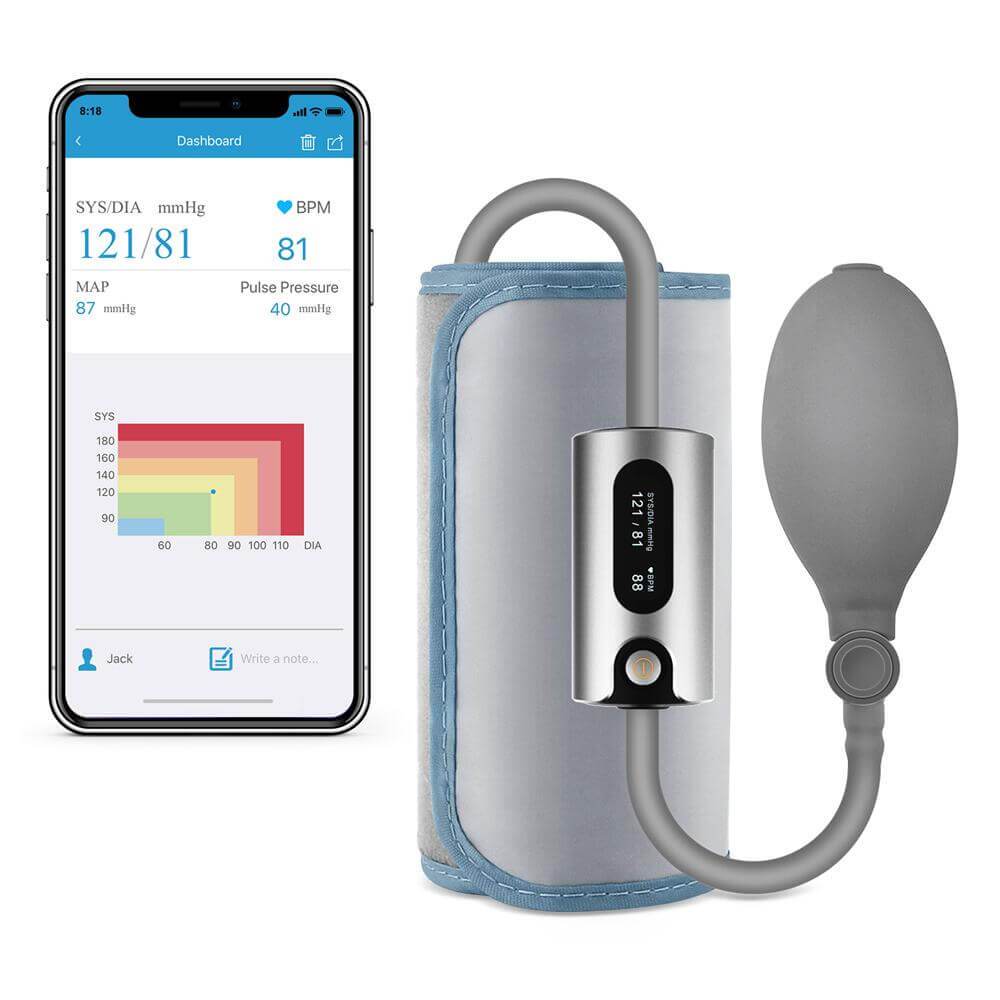
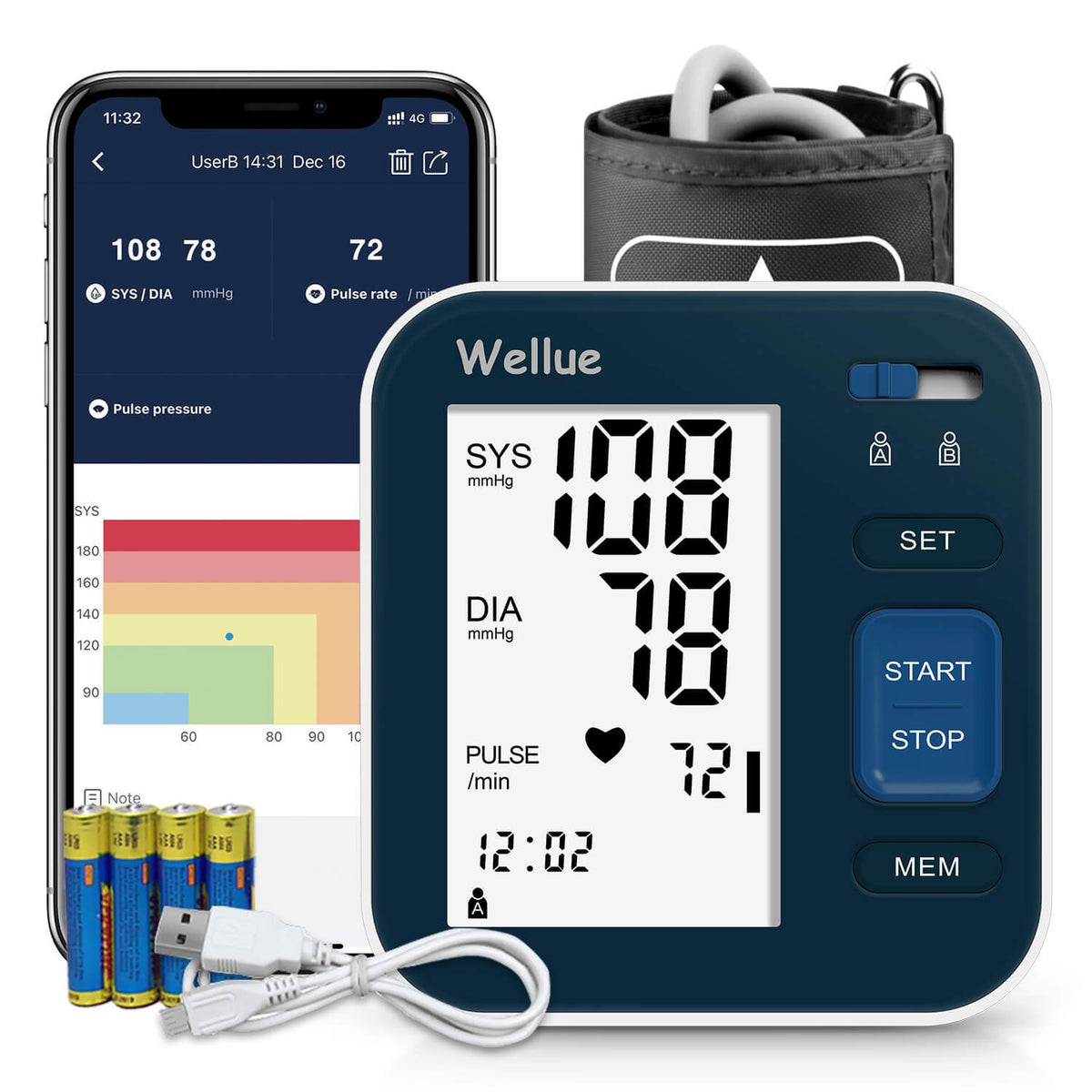
Upper arm monitors, like the Bluetooth Upper Arm Blood Pressure Monitor from Wellue, measure your BP by inflating a cuff around your upper arm—typically giving the most reliable home readings. The proximity to your heart and larger arteries minimizes the risk of error from poor positioning or body movement.
- Accuracy and reliability: Consistently accurate when used with a properly fitted cuff and correct positioning. Ideal for users tracking trends over time or those needing to report data to clinicians.
- Comfort, cuff fit, ease of use: Modern models offer wide-range adjustable cuffs (22-42cm), easy one-press operation, and readable displays. Initial setup may take a few minutes, but daily use is simple.
- Popular features: Memory for 50–100+ readings, Bluetooth connectivity, app syncing, and trend analysis—making it easy to share your history with your healthcare provider.
Best for: Most adults and seniors seeking medical-grade accuracy at home. A limitation: Not suitable for those with very large arms or severe mobility issues. Real-world use: Someone managing hypertension, taking regular morning/evening readings, and needing to track results over weeks.
Wrist Blood Pressure Monitors: Features, Pros & Cons
Wrist monitors appeal for their compact size and portability. They wrap around the wrist, making them easier to use for those with limited mobility or very large upper arms. However, their accuracy can be inconsistent if the wrist is not held at heart level and the user moves during measurement.
- Portability and convenience: Lightweight, travel-friendly, and often easier to put on single-handedly.
- Accuracy challenges: Readings can be affected by arm/wrist position, movement, or vascular stiffness. Users must keep the wrist at heart level and remain steady during measurement—something not everyone finds easy.
- Who might prefer a wrist BP monitor? People unable to use upper arm cuffs due to arm size, pain, or injury, or those needing a device for travel and quick checks.
Best for: Users with limited upper arm mobility or frequent travelers who value portability. A limitation: More prone to inaccurate readings if not used with care. Real-world use: An older adult with arthritis in the shoulders using a wrist monitor for occasional checks while traveling.
Blood Pressure Monitor Upper Arm vs Wrist Comparison Table
| Criteria | Upper Arm Monitor | Wrist Monitor |
|---|---|---|
| Accuracy | Winner: Upper Arm Reliable and consistent when properly used. See product |
Requires exact positioning; more error-prone. |
| Ease of Use | Simple for most users; one-press operation. | Winner: Wrist One-handed operation, good for limited mobility. |
| Comfort | May be tight on large arms; wide cuffs help. | Gentler fit for those with arm discomfort. |
| Portability | Bulky for travel. | Winner: Wrist Pocket-sized for on-the-go checks. |
| Device Features | App sync, memory storage, trend charts. Review Smart BP Monitor |
Basic features; some models offer Bluetooth. |
| Suitability for Seniors | Winner: Upper Arm Best for tracking health trends. |
Good if upper arm use is uncomfortable. |
| Price | Affordable; slightly higher for advanced features. | Usually lowest cost; fewer features. |
Which Type of Blood Pressure Monitor Is Best for Home Use?
For most people, upper arm monitors remain the best type of blood pressure monitor for routine home use. They balance accuracy, comfort, and ease of tracking over time. Wrist monitors are a smart alternative for those with arm size issues, severe arthritis, or frequent travel needs—just remember, proper technique is non-negotiable for trustworthy results.
If you're unsure: Choose an upper arm model if you want reliable numbers and plan to share your data with your doctor. Opt for a wrist monitor only if arm fit or mobility is a serious barrier. When in doubt, accuracy should win.
How to Get the Most Accurate Home Blood Pressure Readings
- Sit quietly for 5 minutes before measuring.
- For upper arm monitors: Place the cuff on bare skin, midway between elbow and shoulder. Rest the arm at heart level.
- For wrist monitors: Hold the wrist at heart level, stay still, and avoid talking during the reading.
- Avoid caffeine, exercise, and smoking 30 minutes before checking.
- Use the same arm and measure at the same time each day for trend consistency.
Device Setup, Maintenance, and Report Reading Basics
- Follow initial setup instructions—most upper arm monitors like the Smart Blood Pressure Monitor offer quick-start guides and one-press operation.
- Wipe cuffs with a damp cloth, never submerge electronic parts. Store in a dry place.
- Review readings regularly. Many models store 50–100 past readings and sync with apps for easy reporting.
Who this is for
This guide is for adults, caregivers, and seniors who want to monitor blood pressure at home with confidence. Whether you’re tracking hypertension, caring for family, or need a travel-friendly device, choosing the right BP monitor—and using it correctly—can help you stay informed and in control.
Conclusion: Choosing the Right Home Blood Pressure Monitor in 2026
For most, an upper arm blood pressure monitor—such as those from Wellue—delivers the best blend of accuracy, reliability, and health insight. If you need portability or have upper arm limitations, a wrist monitor is a practical, though less precise, alternative. Prioritize ease of use, accuracy, and features that help you stick with regular monitoring. When in doubt, accuracy should guide your decision.