Quick take
We break down who this device is best for, what it measures, and how it compares in the market.

Key Takeaways
- Portable oxygen concentrators make it easier to maintain an active lifestyle and support health needs both at home and on the go.
- Prioritize weight, battery life, flow settings, and FDA clearance when selecting a device.
- Top portable oxygen concentrators for travel should be compact, reliable, and offer real-time O2 feedback.
- Proper setup, routine maintenance, and effective use of monitoring features are vital for safe therapy.
- Consult your healthcare provider for prescription and suitability before purchasing.
Introduction: Why Portable Oxygen Concentrators Matter
For anyone who relies on supplemental oxygen, mobility is more than convenience—it's about reclaiming everyday freedoms. Portable oxygen concentrators (POCs) have transformed what’s possible for people with oxygen needs, letting you travel, visit friends, or simply move about your home without being tethered to stationary equipment. Whether you spend most of your time at home or are often out and about, choosing the best portable oxygen concentrator for travel and home use can be life-changing.
The growing need for mobility and independence
Modern oxygen therapy isn’t just about clinical care. It’s about enabling social activity, travel, and spontaneous living. The right POC bridges these worlds, supporting health without sacrificing independence.
Portable vs stationary oxygen concentrators
Stationary units are built for continuous, high-volume use, typically staying in a fixed spot. Portable models trade some flow capacity for compact size, battery operation, and lightweight portability—crucial for travel and active lifestyles.
Who should consider a portable oxygen concentrator?
If you need supplemental oxygen but want to maintain your routine outside the house, a portable model is often the best solution. They’re ideal for active seniors, frequent travelers, or anyone who wants flexibility in day-to-day life.
How Do Portable Oxygen Concentrators Work?
Understanding oxygen therapy at home and on the go
Portable oxygen concentrators draw in ambient air, filter out nitrogen, and deliver concentrated oxygen through a nasal cannula. This provides a steady supply whether you’re relaxing at home or catching a flight.
Pulse dose vs continuous flow: what’s the difference?
Pulse dose devices deliver oxygen in bursts triggered by your inhalation, optimizing battery life and portability. Continuous flow models provide a steady stream of oxygen, typically needed for higher or constant requirements—though these are often bulkier.
Safety and FDA-clearance: ensuring device reliability
Always look for FDA-cleared devices. This ensures the concentrator meets strict safety and efficacy standards (FDA.gov), providing greater confidence in your therapy at home or while traveling.
Top Portable Oxygen Concentrators for Travel and Home Use
Key features to look for
- Weight: Lightweight devices (typically under 5 lbs) are much easier to carry.
- Battery life: Look for 4–9 hours per charge; dual battery options extend outings.
- Oxygen purity: Medical-grade (93% ±3%) is the standard for effectiveness.
- Real-time O2 feedback: Devices with live tracking help ensure your therapy is on target.
| Model | Weight | Battery Life | Flow Settings | O2 Purity | Warranty | Best For | Review/Buy |
|---|---|---|---|---|---|---|---|
| 4.37 lbs | Up to 9 hrs (with 2 batteries) | 1–5 Pulse | 93% ±3% | 3 Years | All-day travel & home use Real-time O2 tracking |
||
| Lightweight | Up to 9 hrs | 1–5 Pulse | 93% High Purity | 3 Years | Travel & mobility Pulse dose optimization |
||
| Heavier | Continuous use (plug-in) | 0.5–5 LPM Continuous | 93% ±3% | 3 Years | At-home therapy High, steady requirements |
Portable Oxygen Concentrator with O2 Monitor
This model is a smart pick if you want a lightweight, travel-ready concentrator that doesn’t skimp on features. With up to 9 hours of battery runtime (using two batteries) and real-time oxygen feedback, it’s well-suited for extended outings, shopping trips, or flights. The O2 monitor feature gives you live data for extra reassurance, which is especially valuable if your oxygen needs vary. It’s best for those who divide their time between home and travel, or for anyone looking for confidence in their therapy on the go. The main limitation is that battery runtime may require planning for longer journeys.
Pulse Dose Portable Oxygen Concentrator
 This compact pulse dose device is designed for travel and mobility. Its refined pulse delivery system conserves battery life and offers up to 9 hours per charge, making it practical for daily errands, appointments, or weekend trips. It’s a practical choice for users who want simplicity, portability, and reliable oxygen purity. While it’s not tailored for continuous flow needs, it excels for active users who require flexibility and easy carry. The main caveat: pulse dose may not suit those needing constant, uninterrupted oxygen delivery.
5L Oxygen Concentrator
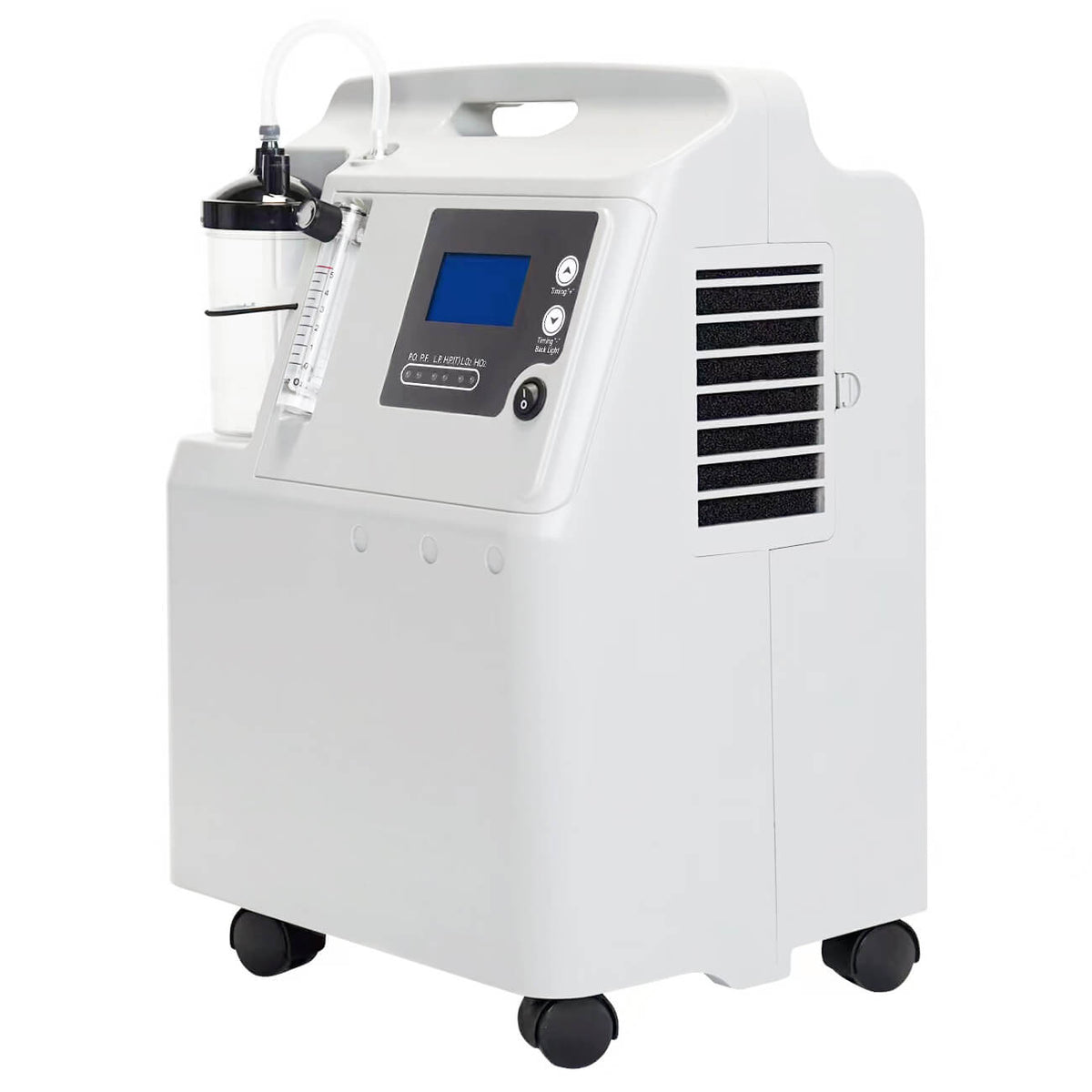 The 5L Oxygen Concentrator is a medical-grade unit ideal for homebound users with higher or steady oxygen demands. It provides continuous flow up to 5 liters per minute and is designed for 24/7 operation. If your therapy requires uninterrupted oxygen—such as for advanced COPD or overnight use—this is the robust, reliable solution. Keep in mind, it’s less portable and not battery-powered, so it’s best kept in a dedicated spot at home.
Portable Oxygen Concentrator Buying Guide
What to consider before purchasing
- Check your prescribed flow rate and delivery mode (pulse or continuous).
- Assess your lifestyle—do you travel often or mostly stay at home?
- Battery life is crucial for extended outings.
- Look for FDA-cleared devices for ensured safety.
Prescription needs and insurance coverage
A valid prescription is required for all medical-grade oxygen concentrators. Some insurance plans may cover part or all of the cost—check with your provider before purchasing.
Travel readiness: airline compliance and portability tips
Most modern POCs are airline-approved, but always verify with your carrier ahead of time. Choose a unit below 5 lbs for easier portability and ensure the battery will last for the duration of your flight plus any layovers.
Setting Up and Using Your Portable Oxygen Concentrator
- Charge the batteries fully before first use.
- Attach the nasal cannula securely.
- Adjust flow settings according to your prescription.
- Review the device’s real-time O2 feedback or use an O2Ring for overnight monitoring.
Check your oxygen levels periodically and contact your provider if readings are consistently out of range.
Cleaning and Maintaining Your Device
- Wipe down surfaces and change or clean filters as instructed.
- Check tubing for blockages or wear.
- Refer to the manual for troubleshooting alarms or performance issues.
Decoding Device Reports and Monitoring Effectiveness
Many units display O2 delivery stats and error alerts. Use these reports to confirm your therapy matches your prescription, and share readings with your healthcare provider at regular intervals.
Who this is for
If you want independence, travel flexibility, or simply don’t want to be housebound by oxygen needs, a portable oxygen concentrator is for you. Those with variable or moderate oxygen requirements benefit most from pulse dose units, while higher or constant needs may require a stationary, continuous flow device.
If you’re unsure: Choose a portable model with real-time feedback if you value mobility and reassurance. Prioritize battery life and weight if travel is frequent. For high, steady needs at home, a 5L continuous model is most suitable.
Conclusion: Choosing the Best Portable Oxygen Concentrator for Your Lifestyle
The Portable Oxygen Concentrator with O2 Monitor stands out for most users seeking versatile support for both travel and home life—especially if you want modern features like live O2 tracking. If you need a lightweight, travel-optimized solution, the Pulse Dose Portable Oxygen Concentrator is a strong alternative. Always consult your healthcare provider before making a decision, and consider your daily routine, oxygen requirements, and travel plans when selecting your device.